Quick Navigation:
Whether you are searching for desktop office pouch laminating sheets for standard thermal card laminators, or heavy-duty roll lamination films for commercial wide-format print shops, this comprehensive guide will help you match the ideal material, thickness, and temperature specifications for your equipment.
Lamination refers to the technique of applying a transparent layer of laminating sheets for a laminator onto the surface of a substrate (such as paper, cards, plastic film, or vinyl) using specific mechanical equipment, adhesives, and processing conditions. Using high-quality laminating sheets for laminator applications serves multiple purposes, typically combining superior physical protection with an enhanced visual appearance.
Material Standards for Laminating Sheets
When choosing laminating sheets for a laminator, the most commonly used materials include BOPP (biaxially oriented polypropylene), PVC (vinyl), and PET (polyester).
BOPP (Biaxially Oriented Polypropylene): Today, many standard laminating sheets for laminator use are made from BOPP. This is essentially polypropylene stretched in two directions, a process that significantly improves strength, water resistance, and optical transparency.
PVC (Polyvinyl Chloride / Vinyl): PVC is widely used for transparent lamination and as a white medium for decals. These specialized laminating sheets for a laminator are frequently applied over white vinyl prints for vehicle wraps—the extra transparent layer provides crucial durability and resistance to UV-induced fading. PVC laminating sheets for laminator machines can be divided into monomeric vinyl and polymeric vinyl, depending on the plasticizers and additives used. These two materials have distinct properties; monomeric sheets have less flexibility and a shorter outdoor lifespan compared to polymeric options.
PET (Polyester): Another popular material is polyester (PET), which is the standard choice when making pouch-style laminating sheets for a laminator used in full encapsulation. Thicker laminating sheets for laminator encapsulation (typically 75 to 250 microns) are applied to both sides of the document to deliver maximum rigidity and durability.
Industry Specifications and Process Classification
The industry generally classifies lamination processes—and the corresponding laminating sheets for a laminator—into three main categories based on the adhesive activation method and processing temperature: cold lamination, heat-assisted (warm) lamination, and thermal (hot) lamination. Different temperature ranges and adhesive properties determine which laminating sheets for laminator systems are compatible with specific media, as well as the final physical and chemical properties of the finished product.
1. Cold Lamination
Definition: A lamination process using pressure-sensitive cold-adhesive laminating sheets for a laminator. This adhesive is tacky at room temperature and bonds directly to the media surface solely through the mechanical pressure of the laminator rollers.
Applications: These cold laminating sheets for laminator use are specifically designed for heat-sensitive media, such as automotive wrapping vinyl, digital printing cloth, and specialized plastic films that are easily deformed by heat.
2. Heat-Assisted Lamination (Warm Lamination)
Definition: A coating process that combines roller pressure with moderate heating. The machine typically features at least one heated roller maintaining an operating temperature of approximately 60˚C to optimize the application of laminating sheets for a laminator.
Applications: Ideal for general single-sided lamination of materials such as paper and cardboard. Pressure-sensitive laminating sheets for laminator equipment can also be heated at this temperature to soften the adhesive. This helps the sheet conform better to uneven surfaces and reduces the chance of "silvering" caused by trapped air bubbles (Note: residual micro-bubbles usually disappear naturally within approximately 48 hours as air diffuses through the laminate).
3. Thermal Lamination (Hot Lamination)
Definition: Strictly speaking, "hot" lamination refers to an encapsulation process performed at a high temperature of approximately 120˚C (though in everyday communication, many people habitually refer to any heated process as hot lamination). This method requires thermal-activated laminating sheets for a laminator.
Applications: Thermal laminating sheets for laminator machines are suitable for printed materials requiring high-temperature activation of hot-melt adhesive to achieve complete edge-to-edge sealing and high-strength rigid encapsulation (such as certificates, menus, signs, and durable graphic materials). They provide excellent waterproof, tear-resistant, and long-lasting protection.
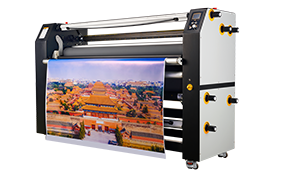
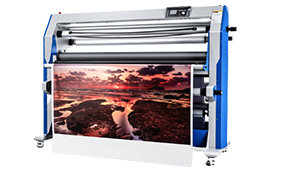
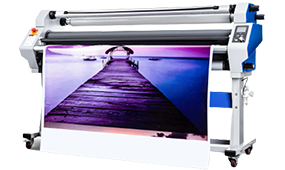
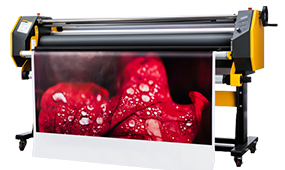
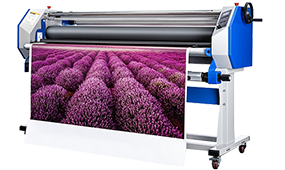
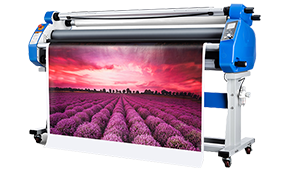
Using high temperature and high pressure, the machine completes the lamination and mounting of the substrate and image simultaneously. Compared to cold systems, utilizing thermal laminating sheets for a laminator is often more cost-effective, produces clearer results, and ensures the surface of the mounted product lasts longer. Furthermore, versatile laminating equipment is suitable for all flat and roll media—operators only need to switch to the corresponding laminating sheets for laminator consumables to process various glass decals, acrylic sheets, PVC boards, MDF, metal sheets, and rigid plastic sheets.
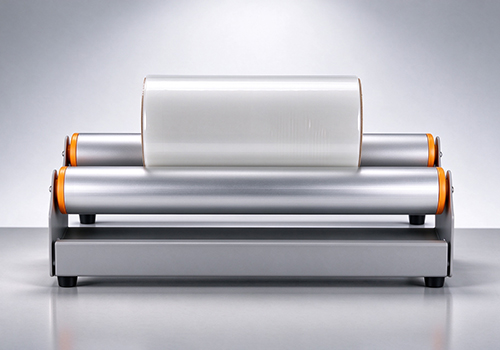
The Golden Thickness Range: Choosing MEFU Laminating Sheets for Laminator
The thickness of specialized film and laminating sheets for a laminator typically fluctuates between 0.015mm and 0.05mm (15μm to 50μm). Choosing the right thickness is like selecting a smartphone's screen refresh rate—too thin leads to operational errors and wrinkling, while too thick can slow down production efficiency. Combined with the MEFU Lamination Film lineup, here is how to choose the ideal thickness:
0.015mm–0.02mm (15μm–20μm): Lightweight Post-Press Packaging Ideal for book covers, office stationery, and brochures. MEFU BOPP Lamination Film offers customizable thin-gauge options with high-quality EVA adhesive (activated at 90–120°C), ensuring bubble-free, durable bonding without delamination.
0.025mm–0.03mm (25μm–30μm): The Universal All-Rounder The sweet spot that balances flexibility and stiffness for high-end printed materials, packaging, and promotional displays. Using these standard BOPP laminating sheets for laminator machines guarantees smooth post-press finishing on 3-inch cores.
0.04mm and Above (40μm+): Heavy-Duty Protection & Wide-Format Graphics Designed for building materials, indoor displays, and short-term outdoor signage requiring robust protection. MEFU PVC Lamination Film is engineered specifically in this heavy-duty range, featuring a 45μm (0.045mm) PVC film + 23μm Clear-Permanent glue + 12μm PE liner. It serves as an ideal low-budget alternative to traditional pressure-sensitive products, delivering non-shrinking, high-tack performance for photos, inkjet, and digital prints—especially when applied with a heat-assisted laminator.
The Physics Behind Film Thickness
When selecting roll film or laminating sheets for a laminator, thickness directly governs three core physical properties:
Stretchability & Dimensional Stability: Thin films can achieve an elongation rate of up to 300%, while thicker films stay under 150%. MEFU’s 45μm PVC film utilizes this structural stability to ensure zero shrinking and strong adhesion across wide-format digital prints.
Light Transmittance & Clarity: A 0.02mm film naturally offers about 8% higher light transmittance than a 0.05mm film. To counter thickness haze, MEFU’s 0.045mm PVC laminating sheets for laminator systems are specially formulated for high transparency and clearance without any yellowing (macular), effectively enhancing colors and sharpening images.
Thermal Sealing Efficiency: For every 0.01mm increase in thickness, the laminating speed must be reduced by 5%–8%. MEFU BOPP films use fast-melting EVA glue (90–120°C) to maximize speed, whereas the thicker 45μm PVC film requires only moderate heat-assisted rollers to achieve a superior, bubble-free finish without slowing down your workflow.
3-Step Practical Selection Guide
Make a smart choice for your equipment with these three steps:
Match the Substrate & Width:
Pair coated art paper with 0.025mm MEFU BOPP film, and corrugated cardboard with 0.03mm+.
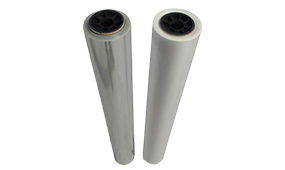
For wide-format inkjet and photo media, choose the 0.045mm (45μm) MEFU PVC Film, available in 150m rolls across five standard widths (914mm, 1070mm, 1270mm, 1370mm, and 1520mm).
Calculate Waste & Efficiency: Choosing thinner BOPP laminating sheets for laminator high-speed runs can reduce scrap rates by 10%. For wide-format mounting, MEFU’s heat-assisted PVC film significantly lowers consumable costs compared to traditional cold laminates.
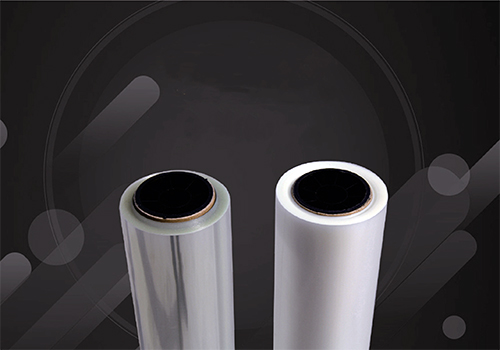
Select the Visual Finish (Glossy vs. Matte):
Glossy Finish: Best kept relatively thin and ultra-clear; MEFU High Gloss delivers vibrant color enrichment and sharp visual impact.
Matte Finish: Can be slightly thicker; MEFU Matte features a finer grain and a sophisticated, non-reflective texture that resists fingerprints and scuffs.
| Parameter / Series |
MEFU PVC Lamination Film |
MEFU BOPP Lamination Film |
| Finish Options |
Matte (Finer Grain) / Gloss |
Matte (Anti-fingerprint) / High Gloss |
| Thickness Structure |
45μm PVC (0.045mm) + 23μm Glue + 12μm PE Liner |
Customizable (0.015mm – 0.03mm+ Available) |
| Adhesive Type |
Clear-Permanent (Pressure-Sensitive / Heat-Assisted) |
High-Quality EVA (Thermal Hot Melt) |
| Operating Temp. |
Cold / Heat-Assisted (~60°C recommended) |
90°C – 120°C |
| Standard Widths |
914 / 1070 / 1270 / 1370 / 1520 mm |
Customizable |
| Roll Length & Core |
150m/roll, 3" Core |
Customizable Length, 3" Core |
| Best Applications |
Photos, inkjet/digital prints, indoor & short-term outdoor signage |
Book covers, high-end prints, packaging, labels, stationery |
Troubleshooting Common Issues with Laminating Sheets for Laminator
Even with professional equipment, operational hiccups can occur when temperature, pressure, and feeding techniques aren't perfectly aligned. Below is a quick troubleshooting guide to fix the four most common problems when applying roll films and laminating sheets for a laminator:
1. Bubbling & Silvering
Why It Happens: "Silvering" refers to tiny, frost-like silvery specks appearing over dark ink areas, while bubbling means trapped air pockets. This happens when the adhesive fails to completely wet out and fill the microscopic valleys of an uneven substrate surface, or when roller pressure is insufficient.
How to Fix It:
Use Heat-Assisted Mode: When applying pressure-sensitive materials like MEFU 45μm PVC Lamination Film, turning on your machine's heat-assisted roller (~60°C) softens the 23μm clear-permanent adhesive, allowing it to flow smoothly into uneven textures and deliver a superior finish.
Wait 48 Hours (The Air Diffusion Rule): Do not puncture micro-bubbles immediately after cold or warm lamination. Simply lay the graphic flat—residual micro-bubbles usually disappear naturally within approximately 48 hours as trapped air diffuses through the laminate.
Upgrade Adhesive Quality: Increase roller pressure slightly, or switch to MEFU BOPP Lamination Film, which utilizes premium EVA adhesive engineered specifically for bubble-free, durable bonding without delamination.
2. Cloudiness & Hazing
Why It Happens: If your finished laminating sheets for laminator projects look milky, foggy, or dull right out of the machine, the operating temperature is too low (or the feeding speed is too fast). The thermal adhesive hasn't melted completely to turn clear.
How to Fix It:
Increase Temp and Re-run: Cloudiness is completely reversible. Simply raise the laminator temperature (for MEFU BOPP films, ensure the roller reaches the 90°C–120°C activation range) and feed the cloudy sheet through the machine a second time. The heat will fully activate the adhesive, instantly restoring high transparency and sharpening your images.
3. Waving, Warping & Curling
Why It Happens: Wavy distortions or severe curling occur when the temperature is set too high, causing the plastic film to overheat, over-stretch, and shrink unevenly as it cools.
How to Fix It:
Calibrate Temperature by Thickness: Thinner laminating sheets for a laminator (0.015mm–0.025mm) require lower heat settings or faster roller speeds to prevent heat shock, whereas thicker gauges (0.04mm+) handle higher thermal energy.
Choose Non-Shrinking Film: For wide-format inkjet and photo media, use MEFU PVC Lamination Film, which is formulated for no shrinking and strong adhesion without requiring extreme thermal encapsulation temperatures.
4. Preventing Machine Jams
Why It Happens: Pouch or sheet laminates get tangled around the heated rollers due to incorrect feeding orientation, exposed adhesive edges, or flimsy substrates.
How to Fix It:
Always Feed the Sealed-Edge First: When using pouch-style laminating sheets for laminator machines, always insert the factory-sealed (folded) edge into the rollers first. Feeding the open end first allows the top and bottom layers to separate and wrap directly around the heated rollers.
Use a Silicone-Coated Carrier Sheet: Whenever you are laminating odd-shaped cutouts, multiple small cards in one sheet, or ultra-thin delicate paper, place the laminating sheets for a laminator inside a protective carrier sheet. It prevents excess squeezed-out glue from fouling the rollers and adds structural rigidity for a jam-free pass.
Need more technical support?
The above lists the four most common basic problems encountered when using laminating sheets for laminators. If you encounter other complex problems (such as electrostatic interference, uneven roller pressure, sensor errors, etc.) in industrial-grade mass production or when operating large-format equipment, please contact the MEFU professional technical support team for one-on-one guidance.


 Premium Series