2026 PROCUREMENT PLAYBOOK · MEFU
Zhengzhou, October 27, 2026 — The search for a customized flatbed applicator rarely begins with a catalogue. It begins with a production bottleneck: a rigid board that will not lie flat, a vinyl graphic that needs repositioning, a wide-format job that takes three people to handle, or a finishing table that no longer fits the shop’s workflow. In 2026, buyers are not simply asking “Which flatbed applicator is cheapest?” They are asking a more commercial question: “Which supplier can match the platform to my substrates, my floor space and my daily output?”
This buyer’s playbook is written for print finishers, sign-makers, distributors and brand owners who need to shortlist a Customized Flatbed Applicator or a Height Adjustable Flatbed Applicator without wasting weeks on unsuitable quotations. It uses the product range and manufacturing background of HENAN MEFU INDUSTRIAL LIMITED as a practical reference, and it separates genuine customization from specification-sheet guesswork.
Why 2026 Buyers Are Replacing “Best Price” with “Best Fit”
Across the sign-making and digital print sector, the pressure in 2026 is not only to print faster. It is to finish faster, handle more mixed materials, reduce rework and make better use of skilled labour. Shorter runs, thicker rigid boards and a wider variety of self-adhesive films all put more strain on the finishing table.
That shift changes the supplier conversation. A low-cost flatbed applicator that is too narrow for the shop’s standard board size will create more handling work. A table that is too long for the available floor space will block access. A machine without the right roller pressure or heating capability may work for one film but fail on another. For procurement teams, the objective is therefore to match four variables before comparing prices:
SubstrateFinished sizeThroughputOperator ergonomics
The supplier’s role is to translate those variables into a workable configuration. That is where a manufacturer with in-house R&D and a broad finishing portfolio becomes more useful than a trading company that can only quote a standard model.
Step 1: Match the Platform to the Substrate and Finished Size
The first specification to confirm is not the price. It is the maximum working width and the maximum material thickness. A shop that regularly mounts 1,220 mm vinyl may assume that a 1,270 mm flatbed applicator is sufficient, but the same shop may also handle 1,600 mm banner film or rigid composite panels. If the applicator cannot cover the full width in one pass, the operator will need to reposition the graphic, increasing the risk of bubbles and edge lift.
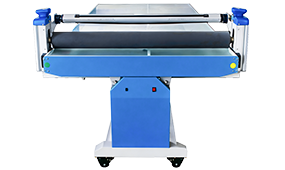
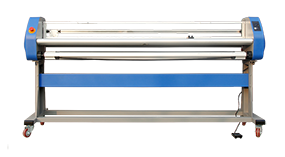
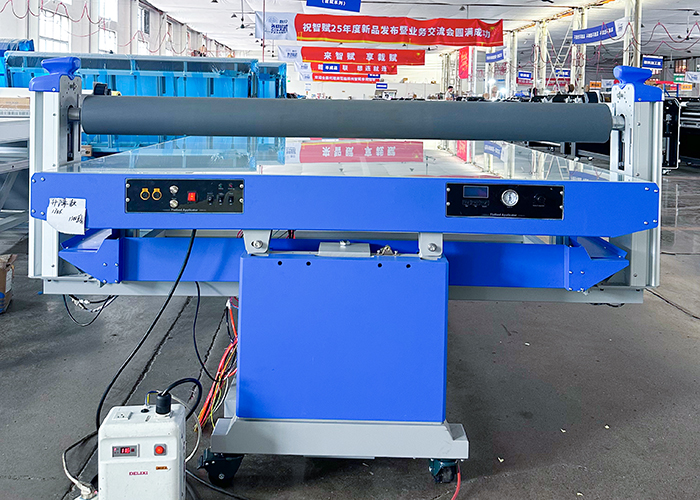
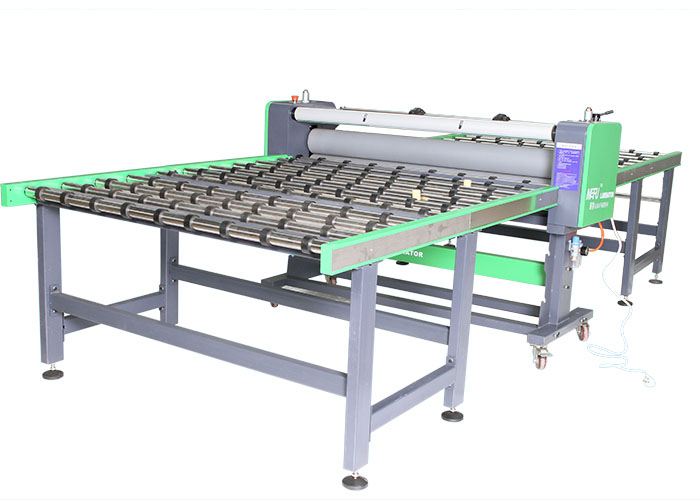
For buyers who need a compact footprint, the MEFU MF1350-B2 flatbed applicator offers a 1,270 mm maximum lamination width, a 3.2 m table and a 25 mm maximum thickness. For larger sign and display work, the MF1950-B2 extends the maximum lamination width to 1,830 mm and the working table to 4.8 m, while retaining a 25 mm thickness capacity and a 7 m/min maximum speed. Both models use four working tables, pneumatic up-and-down movement and infrared heating up to 100°C.
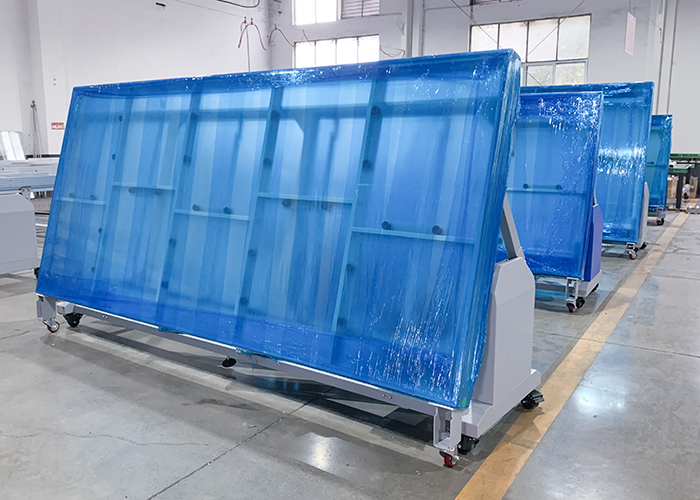
Buyers should also check the material thickness, not just the width. Thick foam board, aluminium composite panel and some honeycomb boards can exceed the capacity of a light-duty table. The MEFU Premium MF-B4 and Standard MF-B4 flatbed applicators are rated to 50 mm maximum lamination thickness, which makes them relevant for shops that regularly handle rigid substrates rather than thin films alone.
Step 2: Decide Whether You Need Cold Mounting, Heat-Assisted Mounting, or Both
Not every flatbed applicator needs heating, but every buyer should be clear about why heating is or is not required. Cold mounting is often used for vinyl application, mounting films and pressure-sensitive adhesives where the adhesive is designed to perform at room temperature. Heat-assisted mounting can help with certain films, improve initial tack and support smoother application on selected substrates, but it also adds temperature control, warm-up time and operator training to the process.
Within the MEFU range, the MF1350-B2 and MF1950-B2 flatbed applicators are specified with infrared heating up to 100°C. The Premium MF-B4 table laminator has a maximum temperature of 60°C, while the Standard MF-B4 is a non-heated flatbed vinyl applicator. This is a useful example of why “more features” is not automatically “better fit”: a busy vinyl-only sign shop may prefer the simpler Standard MF-B4, while a shop mounting a wider variety of films may place more value on the heated Premium MF-B4 or the larger MF1950-B2.
Buyer’s note: Ask the supplier to confirm the maximum temperature, the heating method and the recommended film categories in writing. A machine that reaches a high temperature is not automatically suitable for every adhesive. The right answer depends on the film supplier’s technical data sheet and the shop’s actual operating procedure.
Step 3: Translate “Height-Adjustable Flatbed Applicator” into an Engineering Brief
The phrase Height Adjustable Flatbed Applicator is widely used in search and procurement, but it can mean different things. In some cases, the buyer is referring to a powered roller-lift system that raises and lowers the application roller. In others, the buyer wants the working table height to be adjusted for operators of different statures or for integration with an existing conveyor. In a third scenario, the buyer needs a custom base frame so the table aligns with other finishing equipment.
Before requesting a quotation, write down which adjustment matters to your team:
Roller lift: Is the application roller raised pneumatically, manually or by another system?
Working height: Does the table need to be set at a specific height for ergonomic or line-integration reasons?
Operator variation: Will several operators of different heights share the same table?
Floor and access: Is there enough clearance for a fixed-height platform, or does the table need to be movable?
This is where the customization discussion becomes practical. MEFU’s flatbed applicators use pneumatic up-and-down movement for the application roller, and the range includes adjustable settings for pressure, speed and temperature depending on the model. For buyers with specific working-height requirements, the most reliable route is to provide the actual dimensions, floor plan and operator requirements to the manufacturer for an engineering review. A credible supplier will tell you which parts of the request can be customized, which parts should remain standard, and which changes would affect stability, safety or warranty.
Step 4: Match Throughput, Table Length and Loading Space
Flatbed applicators are often evaluated on maximum speed alone, but real throughput depends on table length, loading space and how many people are needed to handle the sheet. A 3.2 m table can be a good fit for a compact shop that mainly handles smaller display graphics. A 4.8 m table gives more room for large-format panels and multi-sheet work, but it also requires more floor space and a carefully planned loading zone.
The MEFU MF1950-B2 is built with four working tables and a 4.8 m flatbed length, while the MF1350-B2 uses four working tables and a 3.2 m length. Both are designed around a 7 m/min maximum speed and a 25 mm maximum lamination thickness. Buyers who need to handle thicker boards should look at the Premium MF-B4 or Standard MF-B4, both of which support up to 50 mm thickness. The Premium MF-B4 also adds side trays, LED illumination, safety glass, a cutting mat and roll holders at the beam and at the end of the table — features that matter in a busy shop where operators need to switch between mounting, trimming and material storage.
Step 5: Screen the Supplier, Not Just the Specification Sheet
A flatbed applicator is a long-term production asset. The supplier’s ability to support installation, training, spare parts and process questions can matter as much as the machine’s headline specifications. When comparing a Customized Flatbed Applicator supplier, use the following screening criteria:
1. Manufacturing depth
Does the supplier design and build finishing equipment, or only assemble parts? A manufacturer with in-house R&D can respond more reliably to customization requests.
2. Relevant product range
Can the supplier support the wider workflow — laminators, cutters, XY cutters and flatbed applicators — so buyers can source a connected finishing line?
3. Certification scope
Ask for certificates and check the exact product scope. A certificate for one machine family should not be assumed to cover every model.
4. Export and service experience
Has the supplier supported customers in your region? Are English-language manuals, remote support and spare-part logistics available?
5. Customization discipline
A good supplier will challenge unsafe or impractical customization requests and propose a stable, serviceable configuration.
6. Training and handover
Who trains the operators? What documentation is provided for pressure, temperature and roller settings?
Customized Flatbed Applicator Options at MEFU: A Practical Matching Matrix
MEFU’s flatbed applicator range is not a single machine with a single use case. The table below matches the main models to typical production profiles so that buyers can prepare a more focused inquiry.
| MEFU model |
Best-fit production profile |
Key specifications |
Why it fits |
MF1350-B2
Flatbed Applicator |
Compact sign shops, in-house print rooms and buyers with limited floor space who mainly handle small to medium display graphics. |
Max lamination width 1,270 mm; table length 3.2 m; max thickness 25 mm; max speed 7 m/min; infrared heating up to 100°C; four working tables; pneumatic up/down. |
A smaller footprint with heated mounting capability and a four-table layout for flexible handling. |
MF1950-B2
Flatbed Laminator |
Wide-format signage producers and print finishers who regularly handle large panels, banner film and multi-sheet jobs. |
Max lamination width 1,830 mm; table length 4.8 m; max thickness 25 mm; max speed 7 m/min; infrared heating up to 100°C; four working tables; pneumatic up/down. |
Extra working width and table length for large-format mounting, with the same 25 mm thickness capacity. |
Premium MF-B4
Table Laminator |
Shops that mount thick rigid boards and need side trays, LED illumination and a table designed for frequent operator interaction. |
Lamination size 1,325 / 1,630 / 1,632 mm; max thickness 50 mm; max temperature 60°C; pneumatic up/down; side trays; safety glass; cutting mat; roll holders at beam and table end. |
Higher thickness capacity and operator-friendly features for mixed rigid and flexible substrates. |
Standard MF-B4
Flatbed Vinyl Applicator |
Vinyl-focused shops and buyers who need a straightforward cold-mounting table without heating. |
Lamination size 1,325 / 1,630 mm; max thickness 50 mm; pneumatic up/down; LED illumination; safety glass; cutting mat; roll holders at beam and table end. |
A practical non-heated platform for pressure-sensitive vinyl application and general mounting work.
|
For buyers who need a Customized Flatbed Applicator, the most productive starting point is to share the substrate list, the largest and smallest sheet sizes, the required daily output, the available floor space and any working-height requirements. MEFU can then review the request against the selected platform rather than forcing the buyer into an unsuitable standard model.
What Can Be Customized — and What Should Stay Standard
Customization is valuable when it removes a real bottleneck. It becomes a risk when it is added without engineering review. In a flatbed applicator project, buyers commonly discuss customization around table length, working width, roller configuration, control interface, loading direction, side trays and pneumatic lifting. For height-related requests, the buyer should specify whether the requirement concerns roller lift, table working height or integration with adjacent equipment.
MEFU’s 18 years of experience in laminating, cutting and finishing equipment gives the company a practical base for these discussions. Its portfolio includes flatbed applicators, roll laminators, manual cutters, roll-to-roll cutting machines and XY cutting machines. MEFU has also developed an integrated laminating and cutting system and high-speed automatic laminating and cutting machines, which means a flatbed applicator inquiry can be evaluated as part of a wider finishing workflow rather than as an isolated purchase.
Certification, Quality Control and the Integrated Finishing Line
Certification is a useful supplier-screening tool, but buyers should always read the scope. MEFU’s cutting machines — models MF1700-XM, MF1700-XY and MF1700-XA — are covered by CE certificate CKEYS250225014, issued by Guangdong KEYS Testing Technology Co., Ltd. for the EU market. The certificate is valid from 25 February 2025 to 25 February 2030 and references EN IEC 61000-6-2:2019, EN IEC 61000-6-4:2019, EN IEC 61000-3-2:2019/A2:2024 and EN 61000-3-3:2013/A2:2021/AC:2022-01.
For a buyer building a complete finishing line, that certificate supports the cutting side of the workflow. For flatbed applicator procurement, the same discipline should be applied: ask for the applicable model documentation, confirm the scope in writing and check that the machine configuration matches the quotation. MEFU serves the precision-driven needs of both small-format and wide-format printing industries, and its global distribution and service network supports customers through online platforms, international exhibitions and authorized dealers.
Send Your Production Profile, Not Just a Model Number
To get a relevant recommendation for a customized flatbed applicator or a height-adjustable flatbed applicator configuration, share your substrate list, maximum sheet size, thickness range, daily output and floor plan with MEFU.
Contact: YANG
Email: info@mefu.cn
Tel / WhatsApp: +86 15890020566
Address: NO.20 XUEYUAN ROAD, ERQI DISTRICT, ZHENGZHOU, HENAN, CHINA
MEFU flatbed applicator models, specifications and customization options are subject to engineering review and final quotation. Buyers should confirm the applicable model, certification scope, voltage, plug type and spare-parts list before ordering.


 Premium Series