The commercial printing and signage industry demands high-efficiency post-press finishing. Thermal lamination has become a critical process for protecting graphics, enhancing color depth, and extending outdoor durability. Choosing an industrial-grade laminator requires a precise balance of mechanical engineering, thermal consistency, and operational versatility.
This technical review evaluates the machine architecture and product lineup of MEFU—a leading professional lamination equipment manufacturer—to provide a data-backed buying guide for B2B procurement managers and print shop operators.
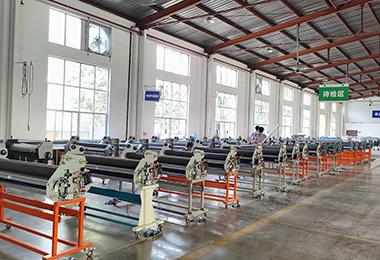
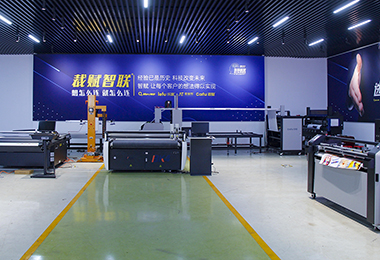
About MEFU: 18 Years of Industrial Lamination Expertise
MEFU operates as a dedicated original equipment manufacturer (OEM) and original design manufacturer (ODM) with 18 years of specialized manufacturing experience in the post-press finishing sector. Supported by an internal R&D and professional technical engineering team, the company designs, machines, and assembles full-scale lamination systems. MEFU’s production infrastructure covers four core product categories:
Roll Laminators: Continuous roll-to-roll and roll-to-piece systems designed for high-speed workflow integration.
Flatbed Applicators: Precision table-based systems engineered for rigid board mounting and large-format panel application.
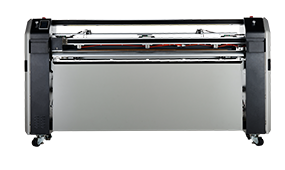
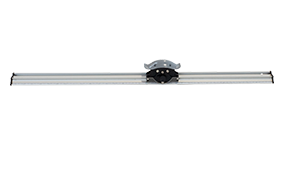
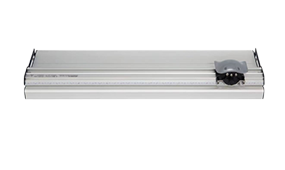
XY Cutter: High-Efficiency XY Cutter For print finishers, cutting specialists & automated workflow integrators.
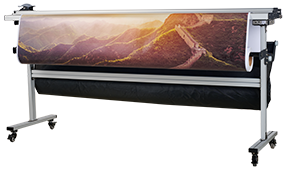
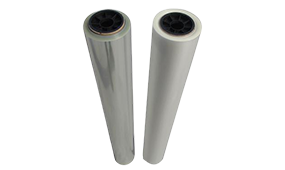
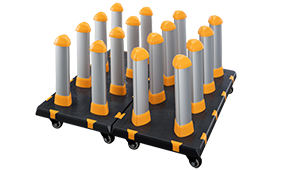
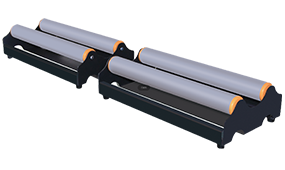
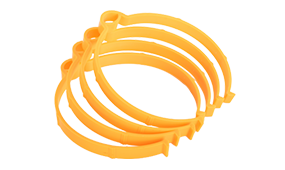
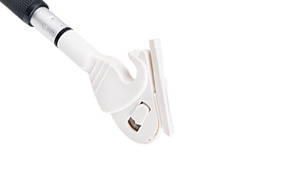
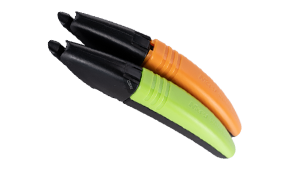
Lamination Accessories: Modular upgrades, specialized material roll holders, and interchangeable cutting elements.
Technical Analysis of Core MEFU Laminator Series
MEFU classifies its machinery based on substrate handling, pressure application mechanics, and workflow orientation. Below is an engineering evaluation of the representative models within their primary product series.
.jpg)
1. Hybrid Flatbed Series: MF-B4 (Standard & Premium)
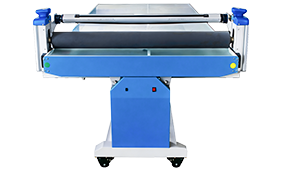
The MF-B4 series bridges the gap between traditional roll lamination and rigid board mounting by utilizing a movable gantry beam over a static workstation.
Substrate Capacity & Dimensions: Engineered for rigid panel applications, the system accommodates a maximum lamination thickness of 50mm. Available working table dimensions include widths of 1.3m and 1.6m, paired with lengths of 2.5m, 3.0m, or 3.2m.
Roller & Thermal Architecture: Features a 130mm diameter glue-free silicone roller. The Premium variant integrates an internal heating element capable of reaching a maximum temperature of 60°C. This thermal input lowers the viscosity of pressure-sensitive adhesives, eliminating micro-air bubbles ("silvering" artifacts) on dense graphics.
Structural Mechanics: Built with a unique tilted-table frame design to decrease shipping costs and simplify access through standard facility entrance doors. The workspace features integrated LED illumination underneath safety glass for precise multi-colored or translucent graphic alignment.
Material Handling: Standardized with dual roll holders—one positioned at the moving gantry beam and one located at the end of the table frame—to enable simultaneous handling of roll media and liner films.
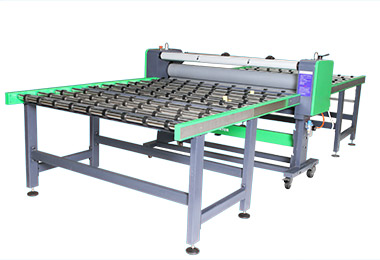
2. Flatbed Laminator Series: MF1350-B2
The MF1350-B2 represents MEFU’s dedicated entry-level and mid-tier flatbed application series, focusing on single-operator efficiency for signage workshops.
Workspace Optimization: Configured with a dedicated 1350mm operational width, making it highly compatible with standard 1.22m x 2.44m (4ft x 8ft) rigid substrates such as PVC foam boards, acrylic sheets, and aluminum composite panels.
Pressure System: Driven by standardized pneumatic cylinders on both sides of the gantry beam, ensuring uniform downward force across the entire width of the roller to eliminate skewing during manual gantry tracking.
Component Reliability: Employs non-stick silicone formulations for the primary roller sleeve, preventing adhesive buildup during exposed-edge application runs without requiring chemical release solvents.
.jpg)
3. Wide Format Roll-to-Roll Series: MF1700-C3
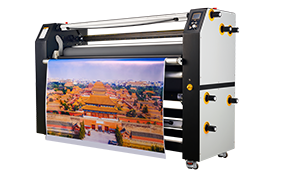
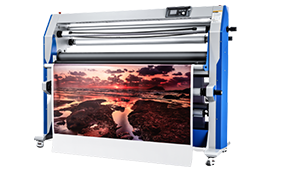
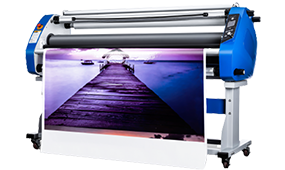
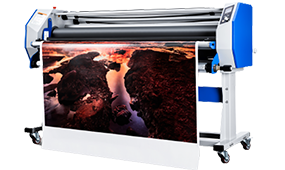
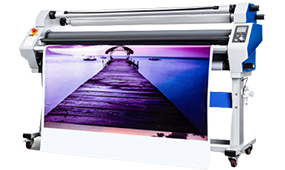
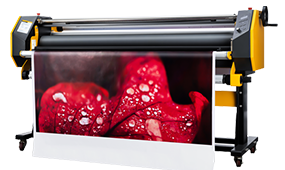
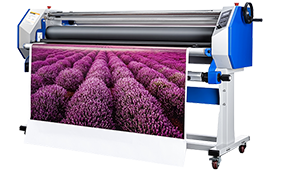
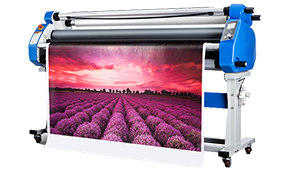
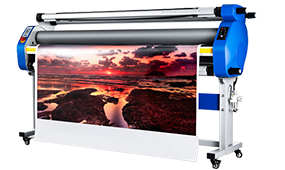
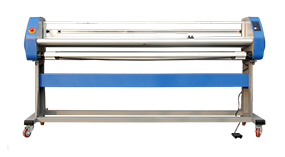
The MF1700-C3 is a heavy-duty, high-speed single-sided hot/cold roll laminator with integrated longitudinal cutting trimmer units.
Throughput & Velocity: Designed for high-capacity industrial print shops, the system achieves stable lamination speeds up to 20m/min.
Material Dimensions: Supports a maximum lamination width of 1630mm (64 inches) and a maximum substrate thickness of 28mm (1.1 inches), covering the full spectrum of wide-format flexible media.
Thermal Specifications: Features a top-heated 130mm glue-free silicone roller adjustable via an upgraded front LED control panel up to 60°C. The panel tracks linear speed, temperature parameters, and historical lamination length records.
Pneumatic Edge Trimming: Features an inline pneumatic rear cutting bar that works alongside fully adjustable trimmer holders. The system includes two single cutters and one double central blade made of tungsten steel, delivering a blade service life exceeding 15000m.
Ergonomics: Dual control interfaces located on both the front and rear panels allow a single technician to manage operations from either material feeding or collection positions.
Technical Advantages of MEFU Systems
MEFU lamination systems incorporate several distinct mechanical and structural features that provide clear operational advantages:
Pneumatic Lift Mechanisms: Dual-side synchronized pneumatic cylinders handle roller raising and lowering, ensuring consistent vertical pressure down to the millimeter. This eliminates the uneven mechanical wear and pressure shifts common in manual hand-crank systems.
Industrial Silicone Rollers: The 130mm oversized solid silicone rollers resist high temperatures and prevent adhesive bonding. The heavy-duty core minimizes structural deflection, maintaining uniform contact across the entire width of the material even during continuous 20m/min operations.
Tungsten Steel Inline Trimming: Rather than relying on standard utility blades, the integrated slitting units use hardened tungsten steel. This maintains precise, clean edges without fraying across various films, including PVC, PET, and polycarbonate.
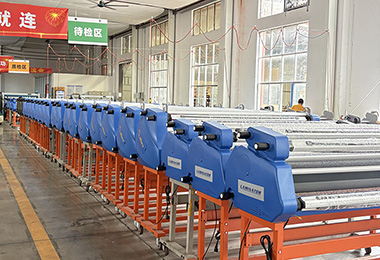
B2B Procurement and Pricing Architecture
MEFU structures its commercial pricing based on three distinct configuration levels:
Standard Version System Attributes: Pneumatic lifting; cold roller execution; ambient operation; basic manual material shafts. Target B2B Segment: Small signage startups; local short-run copy shops.
Premium Version System Attributes: Integrated top heating elements (60°C); underside LED illumination matrices; extended side storage trays. Target B2B Segment: Mid-scale commercial printers; regional display fabricators.
Pro Industrial Version System Attributes: Automated material take-up loops; high-speed continuous tracking (20m/min); multi-blade tungsten slitting modules. Target B2B Segment: Industrial print houses; high-volume fleet vehicle wrap manufacturers.
Industrial Buying Guide: Selecting the Right System Architecture
B2B procurement teams should evaluate their selection based on their primary substrate material and daily production volume:
1. Flexible Media Dominant Workflows (Roll-to-Roll)
If production consists primarily of self-adhesive vinyl, banner materials, fleet graphics, or paper prints, a Wide Format Roll-to-Roll system (e.g., MF1700-C3 ) is recommended. The primary selection criteria should be high linear velocity (15–20m/min) and automated rewind shafts to manage roll tension over long print runs.
2. Rigid Substrate Dominant Workflows (Board Mounting)
If operations involve mounting graphics onto Coroplast, foam boards, glass, aluminum panels, or architectural sheets, a Flatbed Applicator architecture (e.g., MF-B4 series) is necessary. The gantry-over-table design eliminates the risk of board wrinkling, shifting, or crushing.
3. Multifunctional Variable Production
For operations with unpredictable daily variations between flexible banners and rigid panels, a Hybrid Flatbed system featuring a heated roller (60°C) provides the necessary versatility to switch between hot and cold lamination without requiring dedicated standalone machines.


 Premium Series