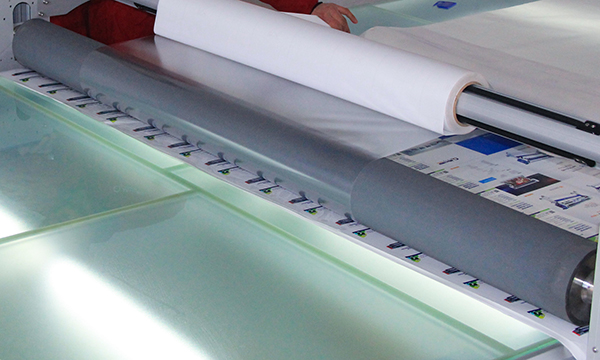
A flatbed applicator is a machine designed to apply film, vinyl, printed graphics, or sheets onto a flat surface using controlled roller pressure. Unlike manual application, which depends heavily on the operator's technique, a flatbed applicator uses a structured working table and moving roller to support a more controlled and repeatable lamination process.
So, how does a flatbed applicator work?
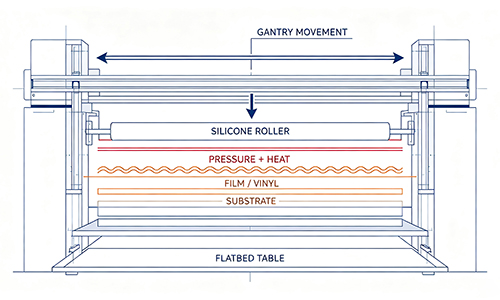
The basic principle is straightforward: the material is positioned on a flatbed table, aligned with the substrate, and then pressed onto the surface by a roller as the gantry moves across the working area. Depending on the machine configuration, the roller may also use pneumatic lifting and heating to support the application process.
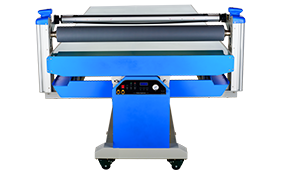
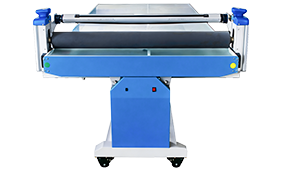
TheMEFU MF-B4 Flatbed Applicator is a practical example of this operating principle. It combines a flatbed table, pneumatic roller lifting, a heated silicone roller, media support, and an illuminated working table for film and lamination applications.
What Is a Flatbed Applicator?
A flatbed applicator is a machine that applies adhesive films or laminating materials to flat substrates. The substrate is placed on a horizontal working table, while an applicator roller moves across the surface to press the film against the material.
The main components typically involved in the application process include:
· Flatbed working table · Applicator or silicone roller · Gantry · Roller lifting system · Media holder · Film or vinyl · Substrate
The flatbed design provides a stable working surface for positioning the material before the application process begins.
The MEFU MF-B4 is designed as a multipurpose flatbed machine. The B4 series features a media roll holder at the end of the table for printed or cut film, as well as pneumatic up-and-down roller movement and silicone rollers.
How Does a Flatbed Applicator Work?
The working process of a flatbed applicator can be divided into several basic steps: positioning the material, aligning the film, lowering the roller, applying pressure, and moving the gantry across the working area.
1. Position the Substrate and Media
The first step is to place the substrate on the flatbed table. The film, vinyl, or printed media is then positioned so that it can be applied to the required surface.
Proper positioning is important because the applicator roller follows the working area of the flatbed. The material needs to be prepared before the roller begins its application movement.
The MF-B4 includes a media holder at the end of the table, which is designed to accommodate printed or cut film and make media handling more convenient.
2. Align the Film With the Substrate
Before lamination, the film needs to be aligned with the vinyl or substrate.
For the MF-B4's laminating process, the operating procedure includes aligning the film with the vinyl, peeling the film, positioning the liner under the roller, and pulling the liner before moving the gantry.
This preparation allows the roller to progressively apply the film as it moves across the material.
3. Raise and Lower the Roller
The roller needs to be positioned correctly before application begins.
The Premium MF-B4 uses a pneumatic up-and-down system for roller movement. The roller can be lifted using a button, providing clearance when the operator is positioning or preparing the material.
Pneumatic lifting is an important part of the machine's operating process because it allows the roller to be raised and lowered without manually adjusting the roller position.
4. Apply Heat and Pressure
Once the material has been prepared, the roller is lowered onto the application surface.
The MF-B4 is equipped with a heated silicone roller and premium silicone rollers. Its standard specifications include a maximum lamination thickness of 50 mm, with available lamination sizes including 1325, 1630, and 1632 mm depending on the configuration.
During lamination, the roller provides contact pressure while traveling across the substrate. The combination of roller movement and controlled contact allows the film to be applied progressively across the working area.
5. Move the Gantry Across the Table
The final main step is moving the gantry across the material.
The gantry carries the roller across the flatbed, allowing the film to be laminated progressively rather than requiring the operator to manually press the entire surface.
For the MF-B4, the documented laminating procedure specifically instructs the operator to move the gantry to laminate the material after preparing the film liner.
The basic working sequence can therefore be summarized as:
Position → Align → Lift Roller → Prepare Film → Lower Roller → Move Gantry → Laminate
Key Components of a Flatbed Applicator
Understanding the main components helps explain how a flatbed applicator works in practice.
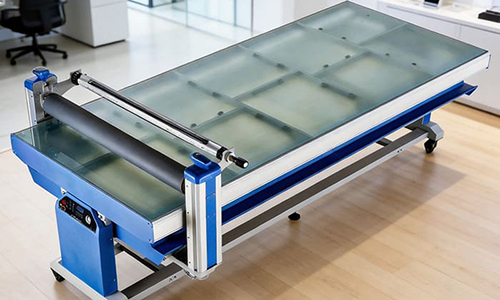
Flatbed Table
The flatbed table provides the main working surface for the substrate and film.
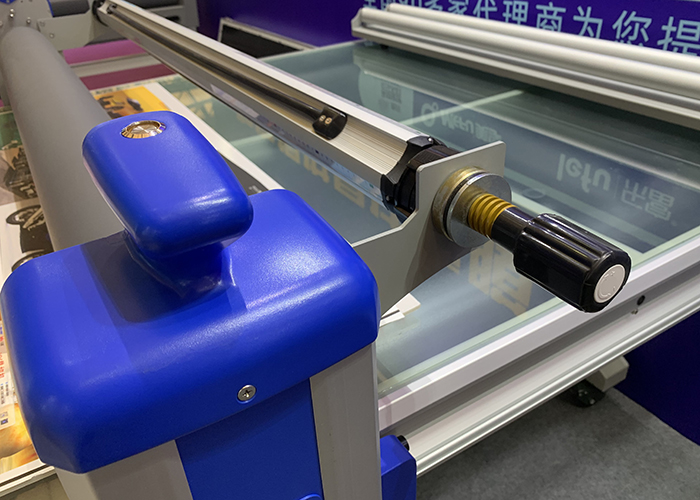
The MF-B4 uses a unique tilted table designed to make facility entry easier while also helping reduce transportation cost and space requirements.
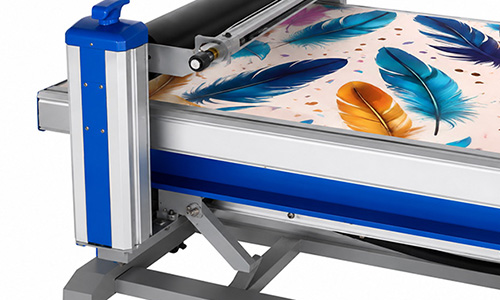
The machine also has an illuminated table. According to the MF-B4 documentation, the illuminated working surface is particularly suitable for applying multicolored or translucent graphics.
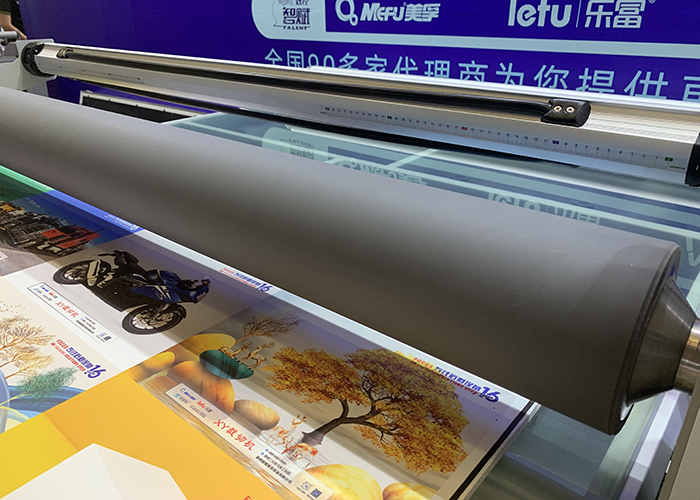
Silicone Roller
The roller is one of the most important components in a flatbed applicator.
Its primary role is to make contact with the film and substrate while the gantry moves across the table.
The MF-B4 uses premium silicone rollers, with a heated silicone roller included in its standard configuration.
Pneumatic Roller Lifting System
The roller lifting mechanism controls the vertical position of the roller.
On the MF-B4, the roller moves up and down pneumatically and can be lifted by a button. This makes it possible to raise the roller during material preparation and lower it for the lamination process.
Gantry
The gantry provides the movement required for the application process.
Once the film has been aligned and prepared, the operator moves the gantry across the working table. The roller follows this movement and applies the film progressively across the substrate.
Media Holder
Handling a film roll can be an important part of the workflow, particularly when working with printed or cut film.
The MF-B4 includes a media holder at the end of the table. This provides support for the media and makes operation more convenient.
LED Illuminated Table
An illuminated table provides visibility from below the working area.
The MF-B4's illuminated table is designed to help when applying multicolored or translucent graphics, where visibility through the material can be useful during positioning and application.
How to Laminate Vinyl With a Flatbed Applicator?
The actual laminating process depends on the material and machine configuration. For the MEFU MF-B4, the documented vinyl laminating process follows four basic steps.
Step 1: Align the Film With the Vinyl
Position the film so that it is properly aligned with the vinyl.
Step 2: Peel the Film and Position the Liner
Peel the film and place the liner underneath the roller according to the operating procedure.
Step 3: Pull the Film Liner
Pull the liner as preparation for the lamination movement.
Step 4: Move the Gantry
Move the gantry across the working table to laminate the material.
This same basic operating sequence is also documented for laminating sheets with the MF-B4.
What Makes the MEFU MF-B4 Different?
The MF-B4 is designed as a fully equipped multipurpose flatbed applicator. Its configuration combines several features intended to support different stages of film and lamination work.
Pneumatic Up-and-Down Roller
The pneumatic roller system allows the operator to raise and lower the roller using the machine controls.
Heated Silicone Roller
The heated silicone roller provides the roller configuration required for the machine's lamination applications.
Unique Tilted Table
The tilted table is designed to make the machine easier to bring into a facility. MEFU also identifies transportation cost and space saving as benefits of this design.
Media Holder
A media holder at the end of the table supports printed or cut film and provides a more convenient way to handle media.
Illuminated Working Table
The LED illuminated table provides working-area visibility and is suitable for multicolored and translucent graphics.
Multiple Lamination Sizes
Depending on the configuration, the MF-B4 is available with lamination sizes of 1325, 1630, or 1632 mm. The maximum lamination thickness specified in the documentation is 50 mm.
How to Choose a Flatbed Applicator?
When evaluating a flatbed applicator machine, consider the following factors.
1. Lamination Size
The available working width should match the size of the materials you normally process.
The MF-B4 is available in configurations with lamination sizes of 1325, 1630, and 1632 mm.
2. Maximum Material Thickness
Check the maximum material thickness supported by the machine.
The MF-B4 documentation specifies a maximum lamination thickness of 50 mm.
3. Roller Configuration
The roller directly participates in the application process, so its construction and lifting mechanism are important considerations.
The MF-B4 uses a silicone roller with a heated roller configuration and pneumatic up-and-down movement.
4. Media Handling
If your workflow involves rolls of printed or cut film, consider whether the machine provides dedicated media support.
The MF-B4 includes a media holder at the end of the table.
5. Working Table Design
The table design can affect installation, material handling, and visibility.
The MF-B4 combines a tilted table with LED illumination, providing features for facility entry, transportation, and working with multicolored or translucent graphics.
Flatbed Applicator Troubleshooting
Correct roller adjustment and machine preparation are important for the lamination process.
Why Can't the Roller Move Up and Down?
The MF-B4 troubleshooting guide identifies several components and operating conditions to check, including:
· Air cylinder · Air compressor · Roller lifting track · Lifting button · Air inlet speed of both cylinders
Why Do Folds Appear During Lamination?
The troubleshooting guide associates folds with factors such as roller condition, roller balance, and alignment between prints and film.
Proper alignment and roller condition should therefore be checked when folds occur.
Why Do Bubbles Appear?
The MF-B4 troubleshooting instructions identify roller condition, roller balance, roller pressure, and print dryness as factors to check when bubbles occur.
Flatbed Applicator Maintenance
Regular maintenance helps keep the roller and mechanical components in suitable operating condition.
The MF-B4 operating instructions recommend:
· Lift the roller after finishing lamination. · Keep the rollers clean. · Avoid scratching the rollers. · Lubricate the gears and chains. · Check and replace the friction mat regularly.
These basic maintenance practices should be incorporated into the machine's operating routine.
See the MEFU MF-B4 Flatbed Applicator in Action
Understanding the working principle is useful, but seeing the machine in operation provides a clearer picture of how the roller, gantry, and flatbed table work together.
Watch the MEFU MF-B4 Flatbed Applicator in action to see how the machine handles film application and flatbed lamination.
Explore More MEFU Finishing Equipment
A flatbed applicator is only one part of a complete printing and finishing workflow. Depending on the application, production volume, material format, and finishing requirements, other equipment may be more suitable or can be used alongside a flatbed applicator.
Roll Laminators
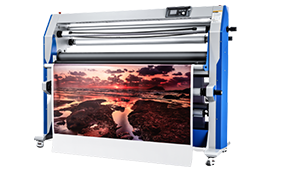
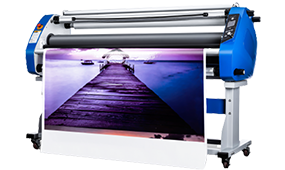
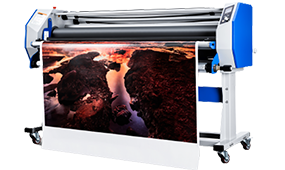
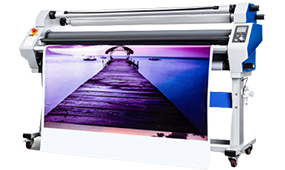
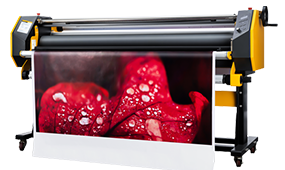
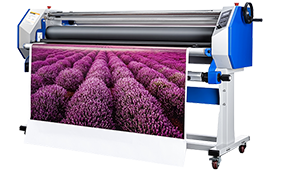
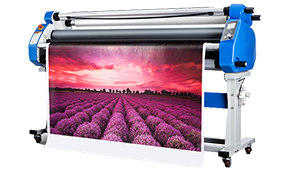
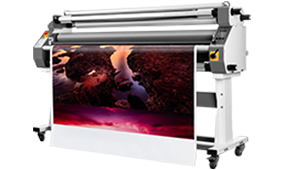
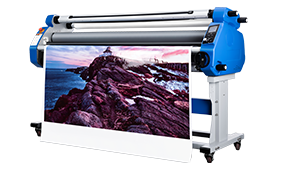
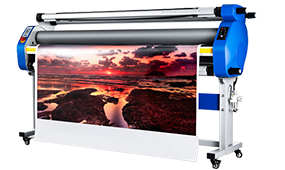
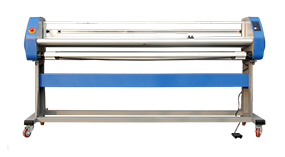
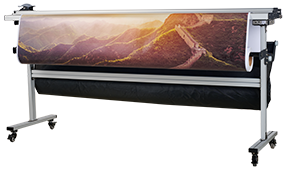
Roll laminators are designed for continuous or roll lamination applications. MEFU offers different roll laminator configurations covering entry-level, Premium Series, and industrial production requirements.
If your workflow primarily involves flexible roll media rather than rigid or flat substrates, explore MEFU's roll laminator range.
Cutting Machine
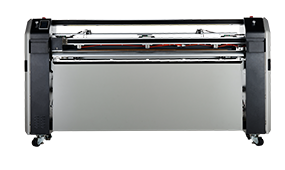
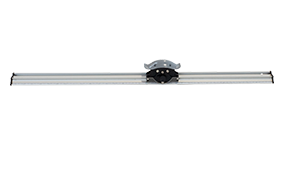
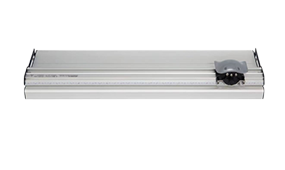
Lamination is often followed by trimming or cutting. MEFU also offers cutting equipment designed for finishing printed graphics and other materials.
For production workflows that require both lamination and cutting, combining the appropriate laminator with a cutting system can simplify the overall finishing process.
Lamination Films and Accessories
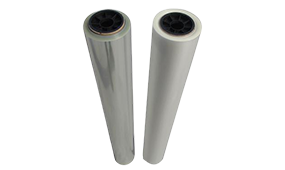
The right film and supporting accessories are also important parts of the finishing workflow. MEFU's product range includes lamination films and accessories for different production requirements.
Choose the Right Lamination Equipment for Your Application
Not every production environment requires the same type of laminator or applicator.
A flatbed applicator may be the right choice when your workflow involves flat substrates, large graphics, printed film, vinyl, or sheet lamination. A roll laminator may be more suitable when continuous roll media and higher-throughput production are the priority. Cutting equipment can then complement the lamination process when trimming or shape finishing is required.
If you are not sure which configuration is suitable for your application, MEFU can help you evaluate the required working size, material thickness, media type, and finishing process.Contact us atinfo@mefu.cn or visit www.mefu.cn to explore our full range of roll laminators, flatbed applicators, and cutting machines.


 Premium Series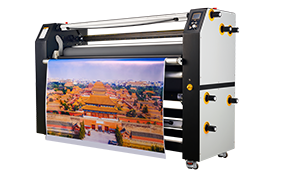
.jpg)