What Is Heat-Assisted Lamination?
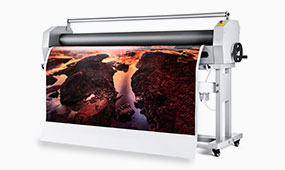
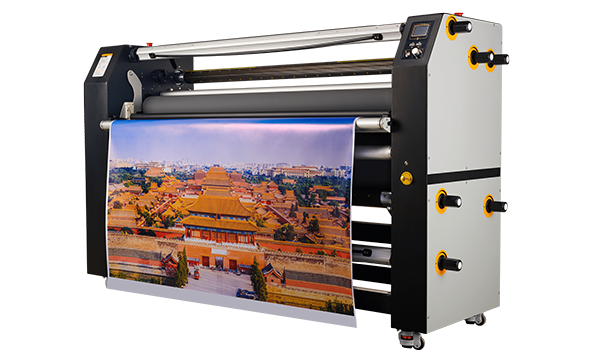
Heat-assisted lamination is a film application process in which controlled heat is introduced during or before the application of a film to a substrate.
The purpose of heating depends on the specific film and adhesive system. In some applications, heat can improve adhesive flow or make a film more conformable. This can help the film establish closer contact with the substrate under controlled roller pressure.
The basic process can be understood as:
Controlled Heat → Film and Adhesive Response → Roller Pressure → Surface Contact → Lamination
The important point is that heating is a process-control option, rather than a universal requirement.
Different films may have different application requirements. Some are designed specifically for cold application, while others may benefit from or require a defined temperature range during application. Therefore, the film and adhesive manufacturer's technical recommendations should always be considered before selecting an operating temperature.
Why Use Heating in a Flatbed Applicator?
Improve Adhesive Workability
Temperature can influence the physical behavior of an adhesive.
Under suitable conditions, controlled heat may make certain adhesive systems more workable during application. This can allow the adhesive to establish better contact with the substrate when combined with appropriate roller pressure.
This is particularly relevant when the film manufacturer's application instructions specify a temperature range. However, heating should not be considered a substitute for proper surface preparation or compatible materials. A clean substrate, suitable adhesive system, correct pressure, and appropriate application technique remain fundamental to the process.
Improve Film Conformability
Some films become more flexible when exposed to controlled heat.
Improved flexibility can be useful when the film needs to conform to a substrate surface during application. The combination of controlled temperature and roller pressure can help the film follow the surface more effectively.
This can be particularly useful for applications involving flexible graphic films, decorative films, or other materials whose application characteristics are temperature-dependent.
Provide More Consistent Processing Conditions
Production environments are not always constant. Ambient temperature can vary between seasons, facilities, or production areas.
For some adhesive and film systems, lower temperatures can affect application behavior. A controlled heating function can provide an additional process variable that operators can adjust according to the material manufacturer's requirements.
This can be valuable for production environments handling different films or substrates.
What Materials Benefit from Heat-Assisted Lamination?
Not every material requires heating. The need for heat depends primarily on the characteristics of the film, adhesive, substrate, and application process.
Films with Heat-Responsive Adhesive Systems
Some films and adhesive systems are designed to be applied within a specific temperature range.
For these products, following the manufacturer's application instructions is more important than simply selecting the highest available machine temperature.
Before using heat, production teams should check:
· Recommended application temperature
· Adhesive type
· Film construction
· Compatible substrates
· Recommended pressure and application conditions
Films That Require Better Conformability
Some flexible films may benefit from improved conformability during application.
When the film becomes more workable under controlled temperature conditions, the roller can help establish consistent contact between the film and substrate.
The actual benefit will depend on the film construction and adhesive technology. Therefore, heating should be evaluated together with pressure and application speed rather than as an isolated machine feature.
Applications in Cooler Working Conditions
Low ambient temperatures can affect the handling characteristics of some adhesive systems.
When an adhesive becomes less workable at lower temperatures, film application may become more demanding. In applications where the material manufacturer permits heat-assisted processing, controlled heating can help establish more suitable working conditions.
However, the correct response to a cold working environment is not necessarily to increase temperature significantly. The target should remain within the recommended processing range.
How Does Temperature Affect Adhesive Performance?
Temperature can influence adhesive behavior in several ways.
When the Temperature Is Too Low
Depending on the adhesive system, insufficient temperature may contribute to:
· Reduced adhesive workability
· More difficult film application
· Incomplete surface contact
· Poor initial bonding behavior
These effects are material-dependent. A film specifically designed for cold application may perform well without additional heating.
When the Temperature Is Within the Recommended Range
When temperature is controlled according to the film manufacturer's specifications, the adhesive and film can operate within their intended processing conditions.
At this stage, temperature works together with other process parameters, particularly:
· Roller pressure
· Application speed
· Substrate condition
· Film tension
· Surface preparation
The objective is not to achieve the highest possible temperature, but to establish a suitable and repeatable application condition.
When the Temperature Is Too High
More heat does not necessarily mean better lamination.
Excessive temperature can potentially cause:
· Film deformation
· Surface damage
· Excessive adhesive softening
· Adhesive residue
· Substrate damage
· Dimensional changes in sensitive materials
For this reason, operators should avoid setting the machine temperature based only on its maximum heating capability.
The correct temperature should come from the film and adhesive requirements, not from the machine's maximum temperature.
Heating Alone Cannot Fix Poor Lamination
When bubbles, wrinkles, edge lifting, or poor adhesion occur, increasing the temperature is not always the correct solution.
Lamination quality is influenced by several interconnected variables.
| Process Factor |
What It Influences |
| Temperature |
Film and adhesive behavior |
| Pressure |
Contact between film and substrate |
| Application speed |
Processing time and film handling |
| Film type |
Adhesive response and flexibility |
| Substrate |
Surface compatibility |
| Surface preparation |
Initial bonding and cleanliness |
| Film alignment |
Wrinkle and positioning control |
For example, bubbles may result from trapped air, contamination, poor application technique, or unsuitable pressure. Edge lifting may be related to adhesive compatibility, substrate preparation, or insufficient contact pressure.
Heating can support the process, but it cannot compensate for an unsuitable film, contaminated surface, or incorrect application technique.
Why Pressure Still Matters in Heat-Assisted Lamination
Heat and pressure perform different functions during film application.
Heating can influence the behavior of the film and adhesive, while roller pressure helps establish physical contact between the film and substrate.
This is why a heated flatbed applicator should not be evaluated only by its heating system.
A more complete process-control approach considers:
Temperature + Pressure + Speed + Material Compatibility
A stable pressure system is particularly important when applying large-format films. Consistent roller contact helps distribute force across the working area and supports uniform film application.
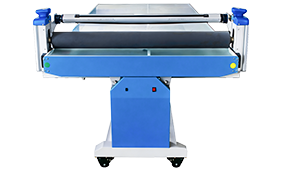
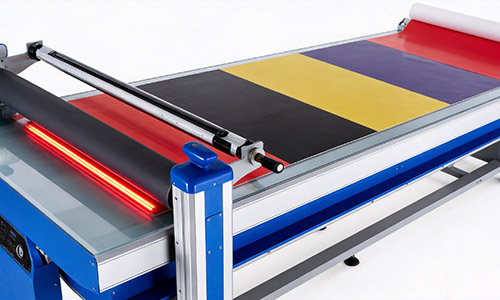
For equipment such as a pressure control flatbed applicator, adjustable pressure can provide greater flexibility when processing materials with different thicknesses and surface characteristics.
What Should You Look for in a Heated Flatbed Applicator?
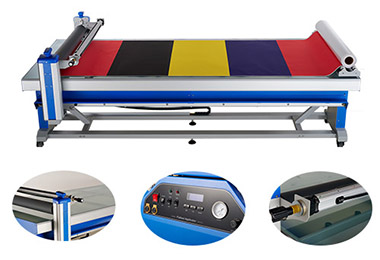
If your production process requires heat-assisted lamination, several equipment characteristics are worth evaluating.
Adjustable Heating
An adjustable heating system provides more flexibility than a fixed-temperature system because different films and adhesive systems may have different processing requirements.
The useful question is not simply:
"Does the machine have heating?"
Instead, ask:
"Can the heating system provide the temperature control required by the materials we actually process?"
Temperature Monitoring
Operators should be able to monitor the working temperature during production.
Temperature monitoring helps establish repeatable processing conditions and reduces reliance on assumptions about the actual working temperature.
Stable Heating Distribution
For a flatbed applicator, consistent heating across the relevant working area is important.
Uneven temperature conditions can result in different film and adhesive behavior across the application area, particularly when processing larger materials.
Pressure Adjustment
Heating should work together with controlled pressure.
An adjustable pressure system allows operators to adapt the application process to different materials and film requirements instead of relying on one fixed pressure setting.
Working Size and Material Compatibility
Heating capability is only one part of equipment selection.
Before choosing a flatbed applicator, also consider:
· Maximum working width
· Maximum material thickness
· Rigid and flexible media compatibility
· Film compatibility
· Roller configuration
· Pressure adjustment
· Heating requirements
The machine should be selected according to the actual production workflow rather than a single specification.
When Do You Actually Need a Heated Flatbed Applicator?
A heated flatbed applicator is worth considering when:
· The film manufacturer recommends heat-assisted application.
· The adhesive system has a defined temperature-dependent application range.
· The film requires improved flexibility or conformability during application.
· Production takes place in relatively cool environmental conditions.
· Different films have different temperature requirements.
· Your production process benefits from additional control over temperature and pressure.
Heating may not be necessary when:
· The film is specifically designed for cold application.
· The substrate is flat, clean, and compatible.
· Ambient conditions are suitable.
· The adhesive provides sufficient application performance without heat.
· The manufacturer's instructions do not recommend additional heating.
· This distinction is important because a heating function should solve a real process requirement rather than simply add another machine specification.
Heat-Assisted Lamination with a MEFU Flatbed Applicator
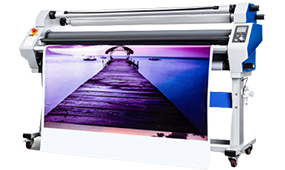
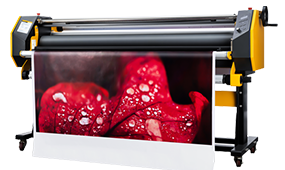
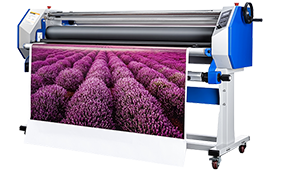
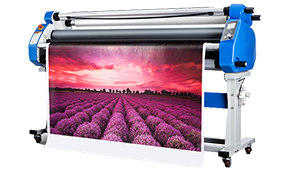
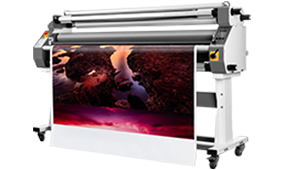
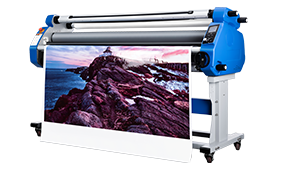
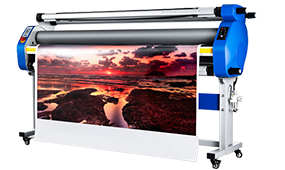
For production environments that process different materials and require greater application flexibility, a flatbed applicator with controlled heating and pressure adjustment can provide additional process options.
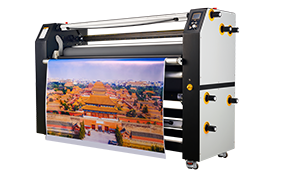
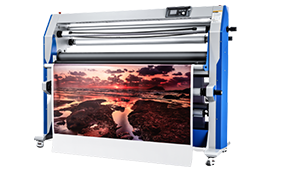
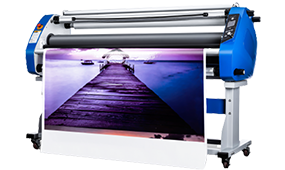
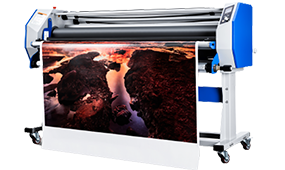
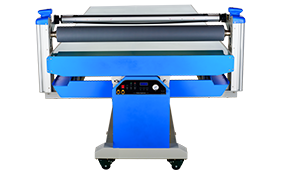
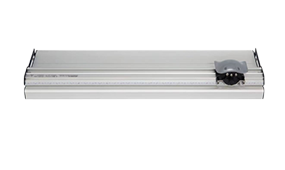
The MEFU Flatbed Applicator B4 series range includes equipment designed for professional film application and laminating workflows. For models equipped with heating, the heating function can be considered alongside the machine's working dimensions, pressure adjustment, roller structure, and media compatibility.
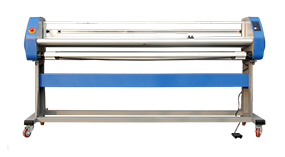
For applications requiring both rigid and flexible media handling, a 2-in-1 hybrid flatbed laminator can also provide greater workflow flexibility by combining different application functions on one platform.
When selecting a MEFU machine, the appropriate configuration should be matched to the actual film, adhesive, substrate, material thickness, working size, and required application process.
Best Practices for Heat-Assisted Flatbed Lamination
To establish a reliable process, production teams should follow a few basic principles.
1. Start with the Film Manufacturer's Guidelines
Always check the recommended application temperature, pressure, and processing conditions for the film and adhesive.
2. Test Before Full Production
For a new film or substrate, perform a small test application before starting full-scale production.
Check:
· Adhesion
· Surface appearance
· Film conformity
· Edge behavior
· Substrate condition
3. Use the Lowest Effective Temperature
Do not assume that higher temperature produces better results.
Use a temperature appropriate for the material and remain within the manufacturer's recommended range.
4. Adjust Pressure and Speed Together
Temperature should not be adjusted independently of roller pressure and application speed.
Changes to one process variable may affect the overall application result.
5. Monitor the Finished Surface
Look for:
· Bubbles
· Wrinkles
· Uneven adhesion
· Edge lifting
· Surface marks
· Film deformation
These observations can help determine whether temperature, pressure, speed, surface preparation, or material compatibility needs to be reviewed.
Conclusion: Heating Is a Process-Control Tool, Not a Universal Requirement
Heat-assisted lamination can be valuable when the film or adhesive system benefits from controlled temperature during application. It can improve film workability, support adhesive performance, and provide additional process flexibility in suitable applications.
However, heating is only one part of the lamination process.A reliable flatbed application workflow depends on the interaction between temperature, pressure, speed, film, adhesive, substrate, and surface preparation.
For manufacturers selecting a flatbed applicator, the most useful approach is therefore to start with the materials and application requirements, then choose equipment with the heating and pressure-control capabilities needed for those processes.
The right heating solution is not the one with the highest temperature. It is the one that gives operators appropriate and controllable conditions for the materials they actually process.


 Premium Series