Introduction: Why Uneven Pressure Matters in Modern Signage Production
In Australia and New Zealand’s wide-format printing industry, finishing quality has become a critical factor in competitive signage production. Applications such as vehicle wraps, outdoor banners, and lightbox graphics increasingly rely on signage laminator machines to ensure durability and visual consistency.
However, a recurring challenge in production environments is the issue of uneven pressure laminator performance, which can lead to bubbles, wrinkles, and inconsistent adhesion across wide materials.
As production widths expand beyond 1600mm, pressure distribution becomes harder to control, making laminator selection a key engineering decision rather than a simple equipment purchase.
What Causes Uneven Pressure in Laminators?
Understanding the root causes helps manufacturers and print shops make more informed decisions.
1. Mechanical Pressure Limitations
Spring-based or manual systems often struggle to maintain consistent force during long production runs, especially under continuous roll-to-roll operation.
2. Roller Material Fatigue
Standard rubber rollers may lose elasticity over time, leading to uneven contact across the substrate surface.
3. Wide Format Structural Stress
When working with widths such as 1630mm (64 inches), even small misalignments become amplified, affecting lamination uniformity.
4. Material Thickness Variations
Substrates ranging up to 28mm thickness require adaptable pressure systems to maintain consistent bonding.
These factors collectively contribute to uneven pressure laminator issues in real-world production environments.
Industry Shift: From Basic Laminating to Stable Output Systems
The ANZ market is gradually moving away from entry-level laminators toward systems designed for stable industrial output rather than basic functionality.
Key trends include:
- Pneumatic pressure control systems
- Silicone roller architecture
- Continuous roll-to-roll workflows
- Controlled heating-assisted lamination
These improvements aim to eliminate variability during long production cycles.
.jpg)
Equipment Example: MF1700-M1 PRO in Industrial Applications
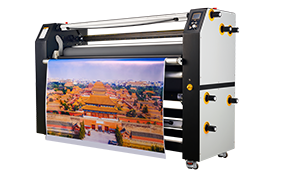
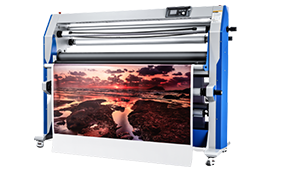
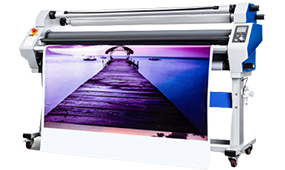
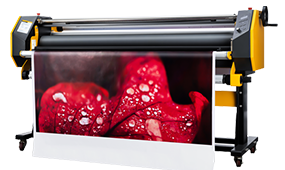
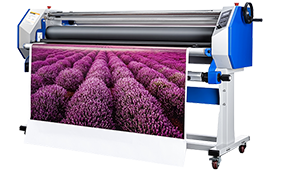
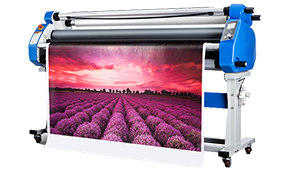
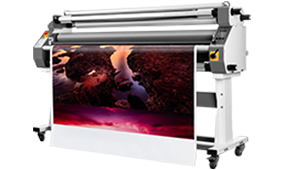
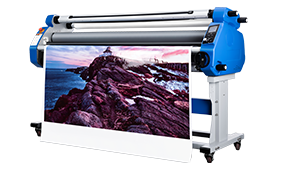
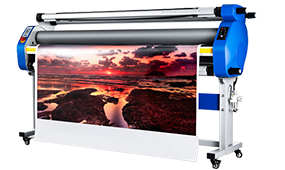
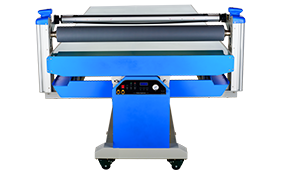
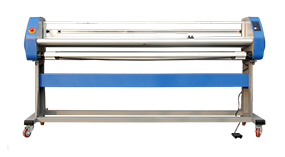
One example of this engineering direction is the MF1700-M1 PRO roll-to-roll laminator, designed for wide-format signage production environments.
It integrates several structural features that directly address uneven pressure challenges:
Key Technical Features:
- Max width: 1630mm (64") – suitable for standard signage production formats
- Roll-to-roll system – supports continuous media processing
- Pneumatic pressure control – ensures consistent lamination force
- Silicone roller system (130mm diameter) – improves contact stability
- Operating speed: up to 15 m/min – supports industrial throughput
- Hot & cold lamination capability – adapts to different adhesive materials
These parameters work together to maintain pressure uniformity during continuous production, reducing the risk of bubbles and misalignment in wide-format applications.
How to Choose a Signage Laminator Machine for ANZ Markets
When selecting a laminator for Australia or New Zealand production environments, consider the following criteria:
1. Pressure System Type
Pneumatic systems are preferred over mechanical spring systems due to better long-term consistency.
2. Width Compatibility
A minimum of 1600mm+ working width is recommended for mainstream signage applications.
3. Roller Construction
Silicone rollers provide better elasticity and reduce uneven surface contact.
4. Production Mode
Roll-to-roll systems are essential for high-volume workflows such as vehicle wraps and banner production.
5. Thermal Capability
Hot and cold lamination modes improve compatibility with different adhesive films and substrates.
Practical Impact: Why Stability Matters More Than Speed
While speed is often highlighted in specifications, real-world production in signage workshops prioritizes:
- Lamination consistency
- Reduced rework rate
- Material compatibility
- Continuous operation stability
In this context, systems like MF1700-M1 PRO are positioned not as high-speed machines, but as stability-oriented laminating systems designed for predictable output in industrial environments.
FAQ: Signage Laminator Machines & Uneven Pressure Issues
What is an uneven pressure laminator?
An uneven pressure laminator is a machine where roller force is not evenly distributed across the material width, often leading to bubbles, wrinkles, or inconsistent bonding.
Why does uneven pressure happen in wide-format laminators?
It typically occurs due to mechanical pressure limitations, roller wear, and structural stress in wide-format processing above 1600mm.
How does a pneumatic laminator improve stability?
Pneumatic systems maintain consistent air-driven pressure, reducing manual variation and improving uniform adhesion across the full width of the material.
Is roll-to-roll lamination important for signage production?
Yes. Roll-to-roll systems enable continuous processing of banners, vehicle wraps, and signage materials, improving workflow efficiency and consistency.
In the ANZ signage industry, the challenge of uneven pressure laminator performance is directly linked to production quality and operational efficiency. As demand for wide-format graphics increases, the selection of a signage laminator machine is shifting toward systems that prioritize pressure stability, material adaptability, and continuous output.
Machines like the MF1700-M1 PRO reflect this trend by combining pneumatic pressure control, silicone roller design, and roll-to-roll architecture to support consistent industrial lamination workflows.


 Premium Series