
About
Roll Laminator
Flatbed Applicator
Cutting Machine
Consumables
Blog
Gallery
Blog
Home > Blog

MEFU vs CWT Flatbed Applicator: A Complete Comparison Guide

2026-10-12
Share:
When choosing a flatbed applicator, sign manufacturers, wide-format printing companies, and graphics finishing businesses often compare manufacturers based on working dimensions, configuration options, production requirements, and long-term costs. CWT Worktools offers flatbed applicators through its Premium, Classic, and Advantage series.

MEFU provides multiple standard configurations and discusses customized solutions for different production requirements. For businesses researching a CWT flatbed applicator alternative, understanding the differences between product configurations is more useful than comparing brand names alone. This guide examines working size, height adjustment, tabletop options, customization, maintenance, and total cost of ownership to help buyers make an informed decision.

MEFU vs CWT Flatbed Applicator: Quick Comparison

MEFU and CWT offer flatbed applicators for wide-format graphics mounting and finishing. CWT organizes its products into Premium, Classic, and Advantage series, while MEFU offers multiple standard working sizes and discusses customized configurations. The right choice depends on the required working area, height adjustment, tabletop features, material-handling accessories, and production volume. Buyers should compare specific models and equivalent configurations rather than relying on brand names alone.
 
Comparison Factor MEFU CWT
Product range Premium, Standard, and Customized series Premium, Classic, and Advantage series
Working dimensions Various standard sizes, customization supported    Multiple sizes across product series
Customization Custom configurations can be discussed Options depend on model and requirements
Height adjustment Depends on configuration Manual or electronic options, depending on model     
Illuminated tabletop Available on selected configurations Available on selected models
Material-handling accessories Options depend on configuration Options depend on model
Maintenance Confirm model-specific service requirements Confirm model-specific service requirements
Purchase cost Request a configuration-based quotation Request a configuration-based quotation

The exact specifications, accessories, and customization possibilities should be confirmed with each manufacturer before purchasing.

CWT Flatbed Applicator Overview

CWT Worktools offers three main flatbed applicator series: Premium, Classic, and Advantage.

CWT Premium Series

The Premium Series is positioned for high-volume production and includes features such as electronic height adjustment, illuminated worktables, and roll holders, depending on the selected configuration.These features may be relevant to businesses that process large-format graphics regularly and prioritize operator ergonomics and workflow efficiency.

CWT Classic Series

The Classic Series offers different working dimensions and configuration options for everyday graphics production.For example, the CWT 1736 Classic is listed with a table length of 3,640 mm, table width of 1,720 mm, and working area of 3,200 × 1,650 mm. Its configuration includes a safety glass surface and cutting mat, while LED lighting and electronic work-height adjustment are listed as options.The CWT 2147 Classic is another large-format example, with a listed table width of 2,100 mm and working area of 4,270 × 2,050 mm. These examples illustrate why buyers should distinguish between the overall table dimensions and the usable working area.

CWT Advantage Series

The Advantage Series focuses on more compact configurations for businesses with different space and production requirements.When evaluating this series, consider the size of your typical materials, available floor space, required accessories, and expected production volume.
For the latest specifications and included features, consult the corresponding CWT Worktools product information.

MEFU Flatbed Applicator Overview


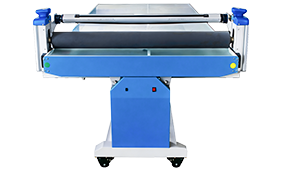
MEFU offers multiple flatbed applicator sizes for different wide-format graphics applications. Its standard product range includes models such as MEFU 1325, 1630, 1736, 1747, 2147, and other configurations.The appropriate model depends on the required working dimensions, substrate size, production workflow, and available accessories.

MEFU also discusses customized configurations for buyers who need specific table dimensions, working heights, or material-handling arrangements.Potential configuration requirements include:
  • Working width and length.
  • Working height and adjustment method.
  • Tabletop configuration.
  • LED illumination.
  • Roll holders and side trays.
  • Material-handling requirements.
  • Production workflow and workshop layout.
Customization can be useful when standard dimensions do not fit a customer's production process. However, buyers should confirm technical feasibility, additional costs, production lead time, and warranty conditions before placing an order.

Explore the
MEFU flatbed applicator range for product information and available configurations.

MEFU vs CWT Flatbed Applicator: Key Differences

Working Size and Format

Working area is one of the most important factors when selecting a flatbed applicator.

CWT provides defined model ranges across its product series. MEFU also offers multiple standard sizes and discusses customized dimensions for specific projects.

Before choosing a machine, identify the largest substrate you process regularly. Allow sufficient space for positioning graphics and handling materials, and check whether the quoted dimensions refer to the usable working area or the complete table.

A larger table is not automatically better. Oversized equipment can occupy valuable workshop space and increase the initial investment without improving your actual workflow.

Height Adjustment

Working height influences operator positioning, material handling, and workflow comfort.

CWT offers different height-adjustment options depending on the model. For example, the CWT 1736 Classic is listed with four-step manual height adjustment, with electronic adjustment available as an option.

For MEFU, buyers should confirm the adjustment method available on the specific configuration being quoted.

The practical question is not simply whether height adjustment exists, but whether the available method suits your operators, materials, and production frequency.

Tabletop Configuration

The tabletop affects how operators position and handle printed graphics.

Both manufacturers offer configurations involving illuminated or LED worktables, depending on the selected model.

When comparing options, consider whether illumination is included or optional, how the work surface fits your applications, and whether additional accessories are required.

Material Handling

Roll holders, side trays, and other accessories can help organize material handling, especially when processing large-format graphics or repetitive jobs.

Instead of counting the number of accessories, identify which ones your operators actually need. Request a quotation that clearly separates standard features from optional equipment.

Production Volume

A machine used for occasional mounting may have different requirements from one used throughout a full production shift.

Businesses with high production volumes should prioritize efficient material handling, consistent operating procedures, and suitable ergonomics. Smaller shops may prioritize flexibility, investment cost, and available workspace.

The best configuration is the one that supports your real production workload without unnecessary complexity.

Why Consider a CWT Flatbed Applicator Alternative?

Searching for a CWT flatbed applicator alternative does not necessarily mean replacing one brand with another based on a single specification.

Different manufacturers offer different product ranges and configuration approaches. Buyers should compare the following factors:
  • Working area and overall machine dimensions.
  • Height-adjustment method.
  • Tabletop and illumination options.
  • Material-handling accessories.
  • Standard model availability.
  • Custom working dimensions.
  • Production volume and workflow.
Warranty, technical support, and spare-parts availability.

MEFU may be worth evaluating when a project requires a particular combination of standard working dimensions and customized features.

For example, a business processing unusually sized substrates may need a table that does not correspond exactly to an existing standard model. In that situation, the ability to discuss a customized configuration becomes an important purchasing consideration.

However, customization should be evaluated against its additional cost, lead time, and long-term service implications.

Flatbed Applicator Price: What Affects the Total Cost?

The initial purchase price is only one part of a flatbed applicator investment.

A meaningful MEFU vs CWT comparison should consider the total cost of ownership, including:
  • Equipment cost: Base machine price, working dimensions, height adjustment, illumination, and accessories.
  • Logistics and installation: Shipping, import duties where applicable, unloading, installation, and commissioning.
  • Operating costs: Electricity, compressed air where required, consumables, and operator time.
  • Maintenance costs: Routine inspections, replacement parts, service labor, and potential downtime.
  • Customization costs: Special working dimensions, non-standard accessories, engineering requirements, and additional lead time.
  • To compare suppliers fairly, request itemized quotations based on the same written specification.
Do not compare a fully equipped machine from one supplier with a basic configuration from another. Confirm which features are included, which are optional, and which requirements may affect delivery time.

How to Estimate Return on Investment

A simple payback estimate can help determine whether an equipment upgrade is financially justified.

Payback period = Total installed investment ÷ Monthly net operating savings

Monthly net savings may include measurable labor savings and reduced material waste, minus additional operating and maintenance costs.

Use your own production figures rather than assumed savings. Results depend on job volume, operator experience, substrate types, and the efficiency of the existing workflow.

Maintenance and After-Sales Support

Maintenance requirements should be part of the purchasing decision from the beginning.

For both MEFU and CWT, ask the manufacturer for the maintenance instructions applicable to the exact model and configuration.

Important points include:
  • Recommended cleaning and inspection procedures.
  • Inspection requirements for moving components.
  • Replacement-part availability and pricing.
  • Warranty coverage and exclusions.
  • Technical support and troubleshooting options.
  • Local service availability and spare-parts lead times.
Keep the work surface clean and inspect relevant components according to the manufacturer's instructions. Actual maintenance intervals depend on machine design, operating hours, and working conditions.

Avoid assuming that one brand has lower maintenance costs simply because its configuration appears simpler. Compare actual service requirements, replacement-part prices, and expected downtime wherever reliable information is available.

How to Choose the Right Flatbed Applicator?

A structured selection process makes it easier to compare a CWT flatbed applicator with MEFU or another alternative.

Step 1: Define Your Maximum Material Size

Identify the largest substrate or graphic you need to process regularly. Consider material handling and positioning space as well as the substrate's dimensions.

Step 2: Determine the Required Working Area

Compare usable working area with overall machine dimensions. Choose a size that accommodates your typical work without unnecessarily increasing the machine footprint.

Step 3: Define Your Production Volume

Determine whether the machine will support occasional jobs, daily production, or high-volume operations.

Your production volume will influence which accessories, adjustment features, and workflow improvements are worth the investment.

Step 4: Identify Essential Configuration Requirements

List the features your workflow requires, such as:

Manual or electronic height adjustment.

LED illumination.

Roll holders.

Side trays.

Specific tabletop requirements.

Customized working dimensions.

Separate essential features from optional upgrades to avoid paying for functions that provide limited practical value.

Step 5: Compare Manufacturer Support

Ask each supplier to confirm the working area, overall dimensions, available options, customization possibilities, compliance documentation, warranty, and service terms.

Where possible, request a demonstration using representative materials from your own production process.

Step 6: Request Equivalent Quotations

Provide both suppliers with the same specification and ask for itemized quotations.

This approach creates a more meaningful comparison of equipment capability, installed cost, service conditions, and long-term value.

Compare Configurations, Not Just Brands

Both MEFU and CWT offer flatbed applicator solutions for different production requirements. CWT's Premium, Classic, and Advantage series provide distinct product configurations, while MEFU offers multiple standard sizes and discusses customized solutions.

Neither manufacturer should be selected based on a single feature or general brand claim.The most reliable purchasing decision comes from comparing working dimensions, required accessories, operator workflow, total installed cost, maintenance requirements, and after-sales support.

For businesses researching a CWT flatbed applicator alternative, MEFU is one option to evaluate against the same written technical requirements.
Hot Products
Relevant News