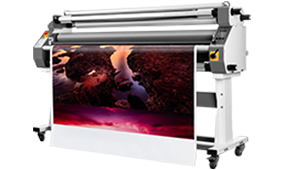
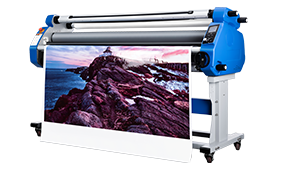
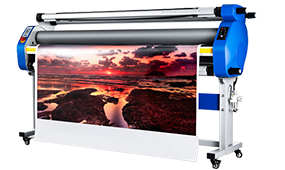
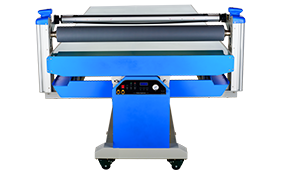
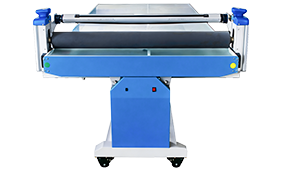
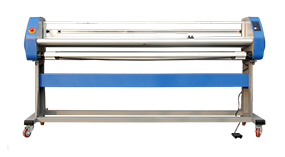
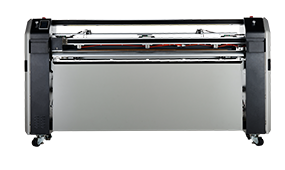
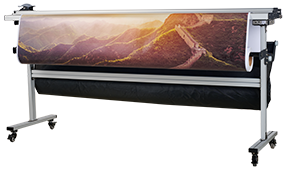
If you're considering a flatbed applicator, one of the first questions is: How much does a flatbed applicator cost?
In 2026, the flatbed applicator price varies widely depending on machine size, roller width, pneumatic or automatic operation, heating, automation, and production capacity.
As a general market reference, entry-level OEM machines can cost a few thousand dollars, while large pneumatic and automation systems can cost tens of thousands of US dollars or more. The right flatbed applicator machine isn't necessarily the cheapest option. Your investment should depend on production volume, labor costs, substrate size, and expected ROI.
Flatbed Applicator Price Range in 2026
The following ranges provide an approximate 2026 market reference:
| Price Tier |
Typical Price Range |
Typical Buyer |
| Entry |
$1,500–$5,000 |
Startups, small shops |
| Premium |
$5,000–$10,000 |
Small and medium sign shops |
| Pro/Industrial |
$7,000–$20,000 |
High-volume production |
| Automatic/OEM |
$2,500–$10,000+ |
OEM and automated applications |
Public prices should be treated as reference prices rather than final flatbed applicator costs. Freight, installation, accessories, taxes, and customization may add substantially to the final investment.
What Can You Expect at Each Flatbed Applicator Price?
Entry-Level Flatbed Applicator: $1,500–$5,000
Entry-level machines typically feature smaller working areas, basic roller systems, manual or semi-automatic operation, standard configurations, and lower production capacity.
They are suitable for startups, small sign shops, and businesses with low application volumes. However, a low flatbed applicator price does not always mean a low total cost. Buyers should also consider durability, service support, spare parts, shipping, and operator productivity.
Professional Flatbed Applicator: $5,000–$10,000
Professional machines may offer larger working areas, wider rollers, better pressure control, pneumatic operation, improved ergonomics, precise application, and better production consistency.
This price range can be a good choice when manual application is becoming a production bottleneck but a large industrial system is not yet necessary.
Industrial Flatbed Applicator: $7,000–$20,000+
An industrial flatbed applicator is designed for businesses where production capacity, repeatability, and large-format capability are more important than minimizing the initial purchase price.
Typical features may include large working areas, heavy-duty construction, pneumatic systems, powered rollers, advanced controls, higher production throughput, and custom configurations.
Why Do Automatic Flatbed Applicators Have Different Prices?
An automatic flatbed applicator can create confusion when comparing prices. Some OEM machines are advertised for only a few thousand dollars, while professional automated systems can cost considerably more.
The difference may come from:
-
Working size
-
Automation level
-
Roller system
-
Heating
-
Control system
-
Material handling
-
Component quality
-
Warranty
-
Installation
-
Technical support
-
Shipping terms
An OEM price may also be quoted on an FOB basis, so the advertised machine price does not necessarily represent the final landed cost.
What Factors Affect Flatbed Applicator Cost?
Several major factors determine the final flatbed applicator price.
Table size: Larger tables require more structural material, larger rollers, stronger drive systems, and larger working surfaces.
Roller width: Wider rollers allow operators to process larger substrates in fewer passes but require stronger mechanical systems.
Manual vs. pneumatic operation: Pneumatic systems can provide more consistent pressure, easier roller adjustment, reduced operator effort, and better production consistency.
Heating: Heated rollers require heating elements, temperature controls, sensors, and additional electrical components.
Automation: Automatic feeding, positioning, programmable controls, alignment, powered roller movement, and production-line integration can increase the investment but may improve ROI for high-volume operations.
Customization: Custom table dimensions, roller widths, fixtures, electrical specifications, and specialized production features can further increase the flatbed applicator cost.
Hidden Flatbed Applicator Costs
The machine price is only part of the total investment. Buyers should also consider:
-
Shipping
-
Installation
-
Compressed air
-
Workspace
-
Maintenance
-
Training
-
Spare parts
-
Additional rollers
-
Electrical upgrades
-
Custom fixtures
For example, a 5 × 10 ft machine requires additional space for loading materials, operator movement, finished products, storage, and maintenance.
How to Choose a Flatbed Applicator
Choose an entry-level flatbed applicator if you have low production volume, process smaller substrates, or have a limited initial budget.
Choose a professional machine if you have regular production and manual application is becoming a bottleneck.
Choose a mid-size or industrial flatbed applicator if you process graphics every day, need larger working dimensions, have multiple operators, or require higher production capacity.
Choose an automatic flatbed applicator if production volume is high, consistent production speed is important, and the machine will be integrated into a larger workflow.
Don't choose a machine based on flatbed applicator price alone. Compare working area, roller width, maximum substrate thickness, pressure, application speed, accuracy, maintenance, spare parts, warranty, technical support, installation, training, and total landed cost.
MEFU Flatbed Applicator Solutions
HENAN MEFU INDUSTRIAL LIMITED (MEFU), headquartered in Zhengzhou, Henan, China, has over 18 years of industry experience in laminating and finishing equipment.
MEFU offers solutions for sign makers, print service providers, advertising companies, and industrial users, including high-speed roll laminators and integrated flatbed applicator solutions such as the MF-B4.
MEFU maintains certifications including ISO 9001:2015, CE, and RoHS, and exports products to more than 110 countries. Its solutions feature technologies such as pneumatic lifting, infrared heating zones, and auto-locked roll shafts.
When comparing flatbed applicator prices, buyers should consider more than the initial purchase cost. Table size, application method, automation, productivity, operating costs, after-sales support, and expected ROI are all important factors.


 Premium Series