
About
Roll Laminator
Flatbed Applicator
Cutting Machine
Consumables
Blog
Gallery
Cases
Home > About > Cases

Second MEFU Laminator at Biznespoligrafiya, Moscow — Case Study

2026-11-16
Share:

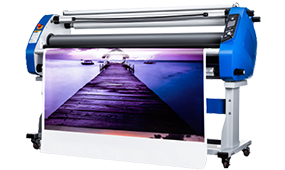
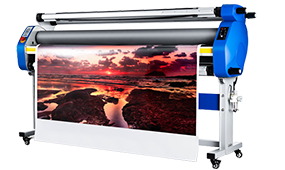
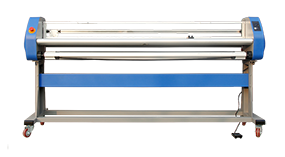
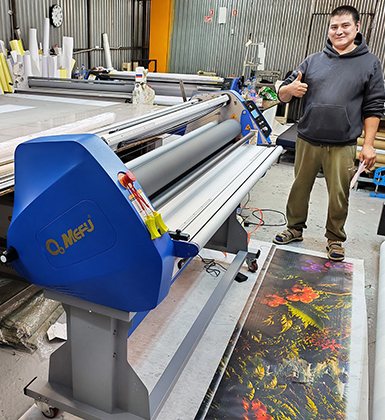
Biznespoligrafiya, a Moscow print house, has been running a MEFU MF1700-M1 for several years. When order volumes grew, it did not shop around: the production floor took delivery of a second MEFU — a single-sided hot laminator, the MF1700-C3 Laminator, with a 1.63 m working width. The first machine stayed in service. Two laminators now share the wide-format workload.

Stat band

1.63 m up to 120 °C up to 28 mm 2
working width roller temperature material thickness MEFU laminators on site
 
Client

 
Company Biznespoligrafiya (типография «Бизнесполиграфия»)
Location Moscow, Russia
Services Short-run digital printing, long-run offset printing, wide-format printing (including photo wallpaper), stickers and mobile display stands, vehicle branding and transit advertising
MEFU equipment MF1700-M1 — in service for several years; MF1700-C3 Laminator — installed in 2026


The challenge: wide format that cannot queue


In a service mix like this, lamination is not a cosmetic finishing step. It is the operation the delivery date depends on.

1. Format hits the width of the roll. Photo wallpaper, mobile stands and banner panels are cut from webs wider than a metre. A machine with a 1.63 m working width laminates the full web in one pass — no joining seam, no second run.
2. Exposure to the real world. Vehicle branding and transit advertising have to survive washing, sunlight and physical contact. Hot lamination bonds the film to the print instead of laying it on top.
3. Peak load. Short-run digital work and long-run offset produce an uneven flow. With one machine on the floor, peak days become a queue and quiet days become idle time. That is why growing volume is answered by adding capacity, not by replacing the machine.


Why the same brand, a second time


The first MEFU laminator proved itself in production: by the print house's own assessment, it meets every requirement the floor puts on it. So when volumes rose, the decision was not to diversify suppliers but to repeat a known result — same mechanics, same tooling, same service channel.
A second machine of the same brand is a specific kind of purchase. Companies make it only after the first one has run for years without quality or support becoming an issue.

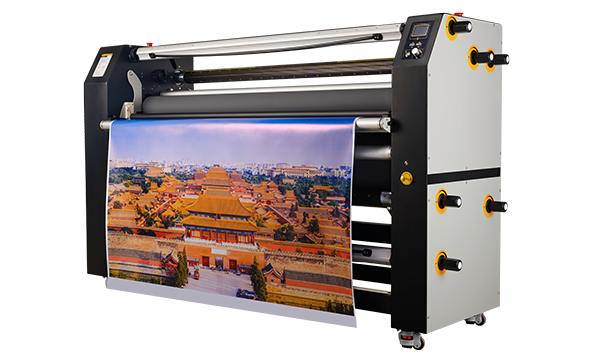
The solution: MEFU MF1700-C3 Laminator

Subheading: Single-sided hot laminator with an edge trimming station
 
Configuration What it does on the floor
Pneumatically lifted working roller, heated to 120 °C The operator sets nip pressure without manual force; temperature holds across the full 1.63 m width
Single-sided hot lamination The film bonds into the print, so the finish survives folding and mounting
Handles material up to 28 mm thick Not only roll-to-roll webs, but rigid substrates ahead of mounting
Take-up for the liner Waste film winds onto a roll — the floor stays clear and stops for clean-up drop
Take-up for finished work Output winds evenly, without creasing, ready for the next operation
Static eliminator Less dust attraction and film cling — fewer bubbles and specks in the reject bin
Two control panels, one on each side of the frame The operator works from whichever side gives the better view of the edge
Foot pedal Both hands stay free for loading and adjusting material
Optical safety sensor The machine stops when a hand enters the danger zone — a baseline requirement before any wide-format unit goes onto a shop floor
Longitudinal edge trimmer The edge is trimmed in the same pass — no separate trimming station, no second handling step
 

How it runs

Five steps from roll to finished web

Loading.
1. Film roll and substrate are fed in; the roller is lowered pneumatically.
Heating.
2. The roller reaches its working temperature of up to 120 °C, evenly across the width.
Lamination.
3. The web passes through the nip and the film bonds to the print.
Take-up.
4. Liner goes to the waste take-up, finished work to the delivery take-up.
Trimming.
5. The Laminator removes the edge in-line, while the static eliminator discharges the web before and after the nip.
 

Result

Every production requirement is covered. In the print house's assessment, the machine meets the demands of the floor in full — which is why the answer to growth was another unit of the same model rather than a different supplier.
Capacity grew; complexity did not. Two laminators from one brand mean one set of settings, one tooling stock and one service channel. A new operator learns on the same interface they already know from the M1.
Downtime risk is lower. A peak order no longer puts the whole wide-format department in a queue behind a single machine.


Specifications

 
Parameter Value
Type Single-sided hot laminator with edge trimmer
Model MEFU MF1700-C3 Laminator
Working width 1,630 mm (1.63 m)
Roller temperature up to 120 °C
Material thickness up to 28 mm
Maximum speed 20 m/min
Roller pressure pneumatic lift
Equipment liner take-up, finished-work take-up, static eliminator, two control panels, foot pedal, optical safety sensor, longitudinal edge trimmer
 

 FAQ

What roll width can the MF1700-C3 take?
The working width is 1,630 mm. That is enough to laminate wide-format webs in a single pass — photo wallpaper, banner panels, material for mobile display stands — without joining a seam.
What does the edge trimmer add?
The edge is trimmed as the web runs. No separate trimming station and no second pass, so there are fewer manual operations and the edge geometry stays consistent.
Why two control panels?
The operator works from whichever side of the frame gives the clearest view of the edge and the finish. On a wide machine that saves walking the length of the unit.
Is it limited to roll materials?
No. The MF1700-C3 handles material up to 28 mm thick, which covers rigid substrates ahead of mounting.
Hot Products
Relevant News